Chapter 8 — Equipment & the Lent Grid
“Everything in this city is rented. Your rooms, your rail-pass, the charge in your rifle, the light over your workbench. Even the sun down in the deep runs on someone else’s meter. You want to know how Sulamir really works? Find out who you owe by nightfall.” — a Steam-Worker’s saying, quoted in the Iron Coin’s own induction primer
This chapter is what your character carries and how they pay for it. The rules of buying, wearing, and wielding are the familiar ones (Chapter 10) — but in Merretia the gear itself, and the power that runs half of it, belong wholly to this world. The through-line is the one the whole city lives by: all light is lent. Here that is not cosmology, it is your monthly bill.
Coin: the Iron Coin’s ladder
Section titled “Coin: the Iron Coin’s ladder”Sulamir’s money is minted and underwritten by the Iron Coin — the banking guild whose charter is sovereign currency — and every coin bears the Sulamir seal. Iron comes up out of the Long Rent, the continent-splitting canyon, which is why the smallest coin is iron and not copper. Value runs in four denominations:
| Coin | Nickname | Metal | Value |
|---|---|---|---|
| Iron bit | ”a bit” | iron | the small change of the street |
| Silver mark | ”a mark” | silver | 10 bits |
| Gold seal | ”a seal” | gold | 10 marks (the standard unit — prices are quoted in seals) |
| Oath-mark | ”an oath” | oath-metal-backed note | 10 seals (great-House and guild sums; “that’ll cost you an oath”) |
Prices in this book are given in gold seals unless noted. A guild seal on a contract makes a debt enforceable across provinces — so in Sulamir, a signature is very nearly money, and the line between a coin and a kept promise is thinner than anywhere else in the world.
Starting wealth. Roll or take the standard funds for your Calling and Origin (Chapters 4–5); a beginning adventurer starts with a modest handful of seals, not a fortune. The truly telling number is not what you own — it is what you owe. (See the Lent Grid, below.)
Weapons
Section titled “Weapons”Merretian arms come in three families: the martial line (steel and oath-metal, melee-primary), the arc-locks (the charged coil-arms that are this world’s answer to the gun), and — at the far margins — powder-arms. Full lore is in; this is the player’s rack.
The martial line
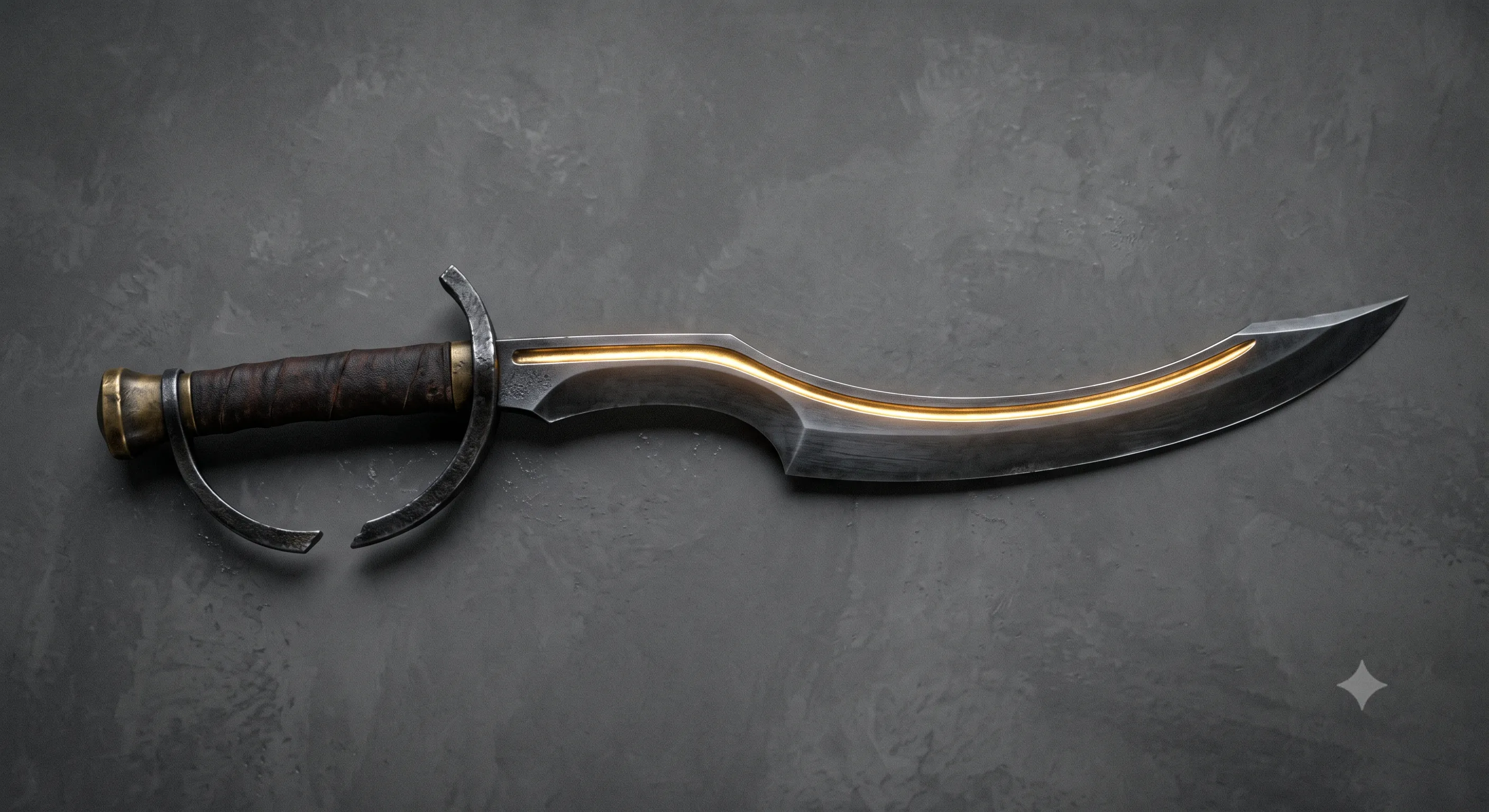
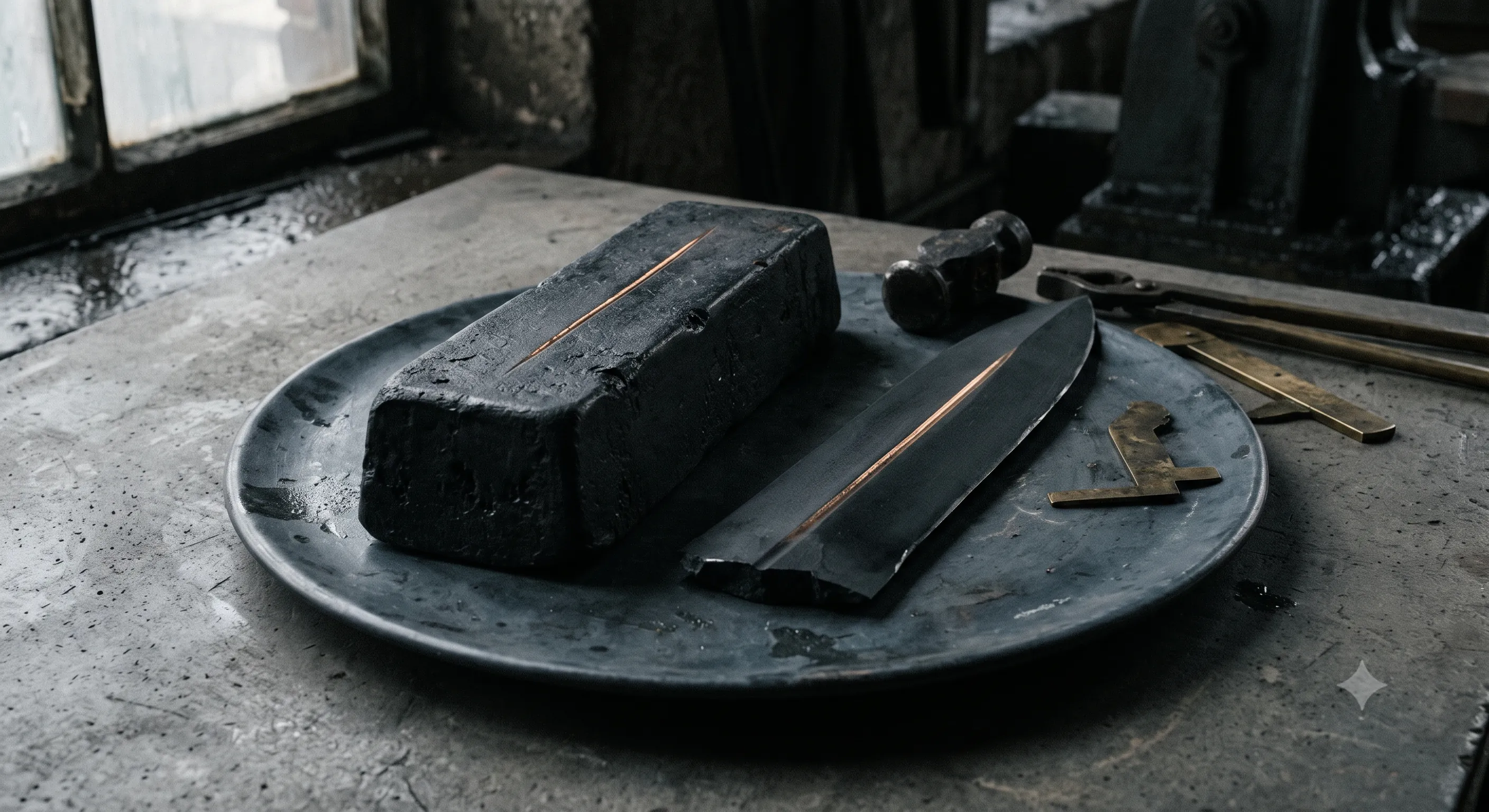
Section titled “The martial line”Ordinary weapons work by their ordinary rules and names. What makes an arm Merretian is oath-metal (Kardun drun-vel): a vow spoken into the pour at the forge. An oath-metal weapon has the Oathbound property — while its wielder holds the vow sworn into it, it counts as magical for overcoming resistance and flares warm gold for half a second on the draw; break that vow and it is merely fine steel until re-sworn. Oath-metal arms are costly and never mass-issued.
| Weapon | Cost | Damage | Weight | Properties |
|---|---|---|---|---|
| Kelvath (vow-blade) | 50 seals (oath-metal) | 1d8 slashing | 3 lb | Finesse, versatile (1d10), Oathbound |
| Vardrun (true-weight lance) | 45 seals (oath-metal) | 1d12 piercing | 8 lb | Heavy, reach, two-handed, Oathbound |
| Grief-hooks (paired) | 25 seals | 1d6 slashing (each) | 2 lb | Finesse, light, thrown (20/60) |
| Marshal-iron (baton) | 2 seals | 1d6 bludgeoning | 2 lb | Light; may deal nonlethal freely |
| Kardun war-maul | 15 seals | 1d10 bludgeoning | 10 lb | Heavy, two-handed |
| Sicklestaff, hand-axe, work-knife | 1–10 seals | by type | — | standard simple/martial equivalents |
The Kelvath is the Duelist’s signature (Chapter 4) — an asymmetric single-edge glaive-sword with a broken-ring guard, because Kardun smithcraft never closes a circle (a closed ring is a dead vow). The vardrun is the Ironclast’s breacher: its head keeps a measure of raw unshaped mass, so it hits like something twice its size.
Arc-locks — the charged coil-arms
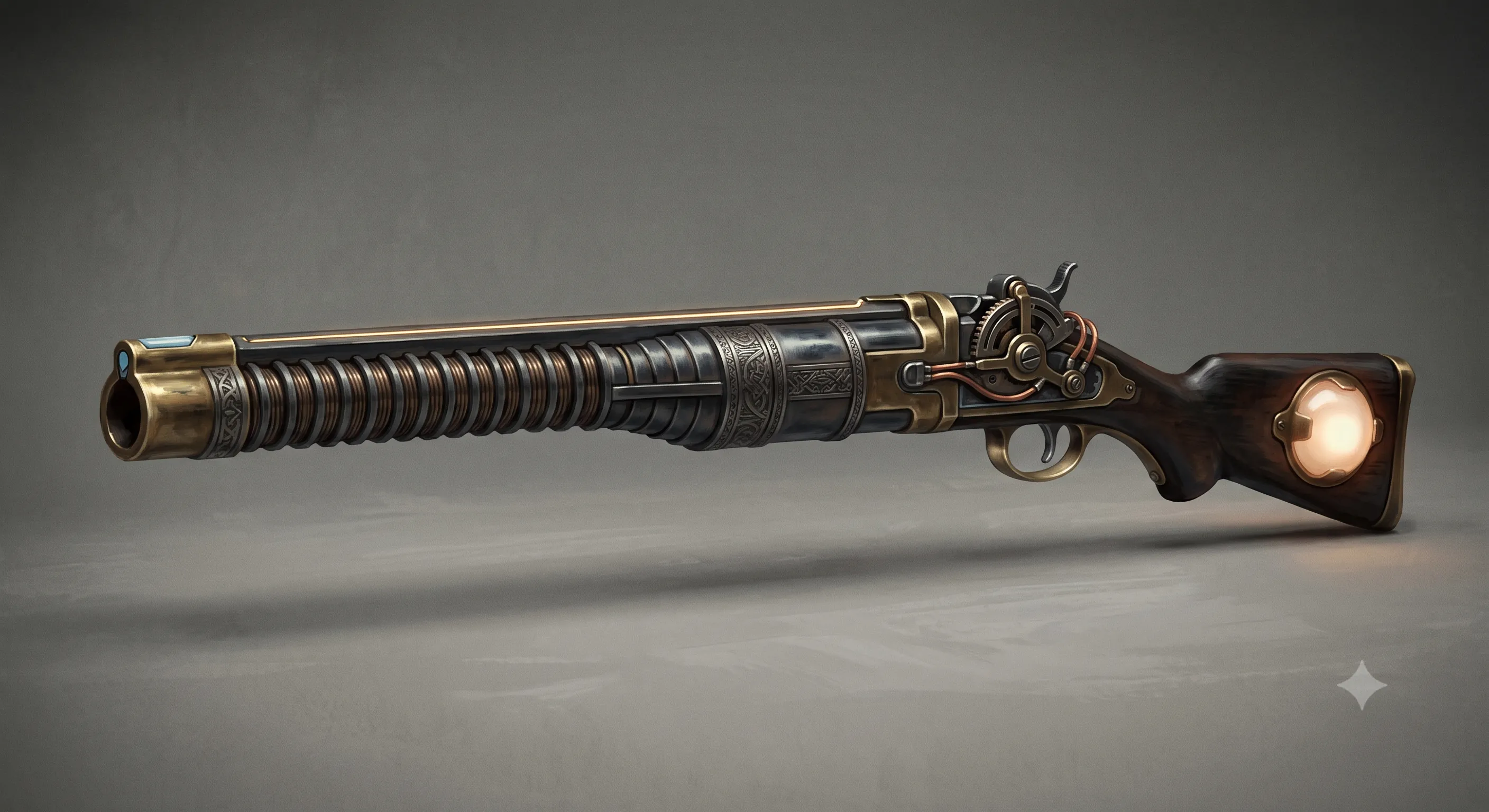
Section titled “Arc-locks — the charged coil-arms”The ranged weapon of the city is the arc-lock: a magnetic-coil arm fed by a swappable buried-sun cell, descended from magnerail engineering. It fires a physical slug — not a bolt of light; colored discharge is the exclusive tell of a real channeler. Its signature is the absence of one: no muzzle flash, no smoke — a compressed THOOM like a door slamming in a vacuum, then a half-second of ringing silence as the air rushes back.
Every arc-lock has the Charged property: it draws from a docked buried-sun cell (see the Lent Grid). When the cell is empty, the weapon is an awkward club. Sustained fire overheats the coil-throat, so trained shooters fire in measured shots, not sprays (mechanically: firing more than once per turn risks a coil-jam — see the DM’s option in Chapter 10).
| Arc-lock | Cost | Damage | Range | Weight | Cell (shots) | Properties |
|---|---|---|---|---|---|---|
| Coilbow | 25 seals | 1d8 piercing | 80/320 | 5 lb | 6 | Charged, two-handed, loading |
| Vow-Rifle | 90 seals | 1d10 piercing | 100/400 | 8 lb | 10 | Charged, two-handed |
| Rail-lance | 160 seals | 1d12 piercing | 150/600 | 12 lb | 8 | Charged, heavy, two-handed |
| Sidearm coil-pistol | 40 seals | 1d6 piercing | 40/120 | 2 lb | 5 | Charged, light |
The coilbow (crossbow silhouette, amber capacitor-glass that drains visibly as it fires) is the cheap, frontier-and-militia format. The Vow-Rifle is the flagship — individually oathed, House- or unit-liveried, its barrel etched with a service record; mass-issue barrels are mundane Kardun alloy, but relic-tier Vow-Rifles (Chapter 7) are oath-metal and named. A coil-pistol is the sidearm that finally gives a magic-free Duelist or Ironclast a real answer at range.
Powder-arms (the marginal tech)
Section titled “Powder-arms (the marginal tech)”Gunpowder exists in Merretia, but crude, off-grid, and quietly suppressed — the grid-free equalizer the guilds fear and cannot license. A powder-lock needs no cell and no grid, which is its whole point on the frontier and in rebel hands; but it is loud (the one arm with a real report and smoke — it gives away position and it is illegal to carry openly under the Dome), slow, and disdained.
| Weapon | Cost | Damage | Range | Weight | Properties |
|---|---|---|---|---|---|
| Powder-lock | 15 seals (frontier) | 1d10 piercing | 60/180 | 6 lb | Loud, loading, off-grid, restricted (illegal in Sulamir) |
(A GM note on what powder-arms mean for the world is in the Master’s Guide; players should know only that carrying one in the city is a fast way to meet the Marshals.)
Armor & shields
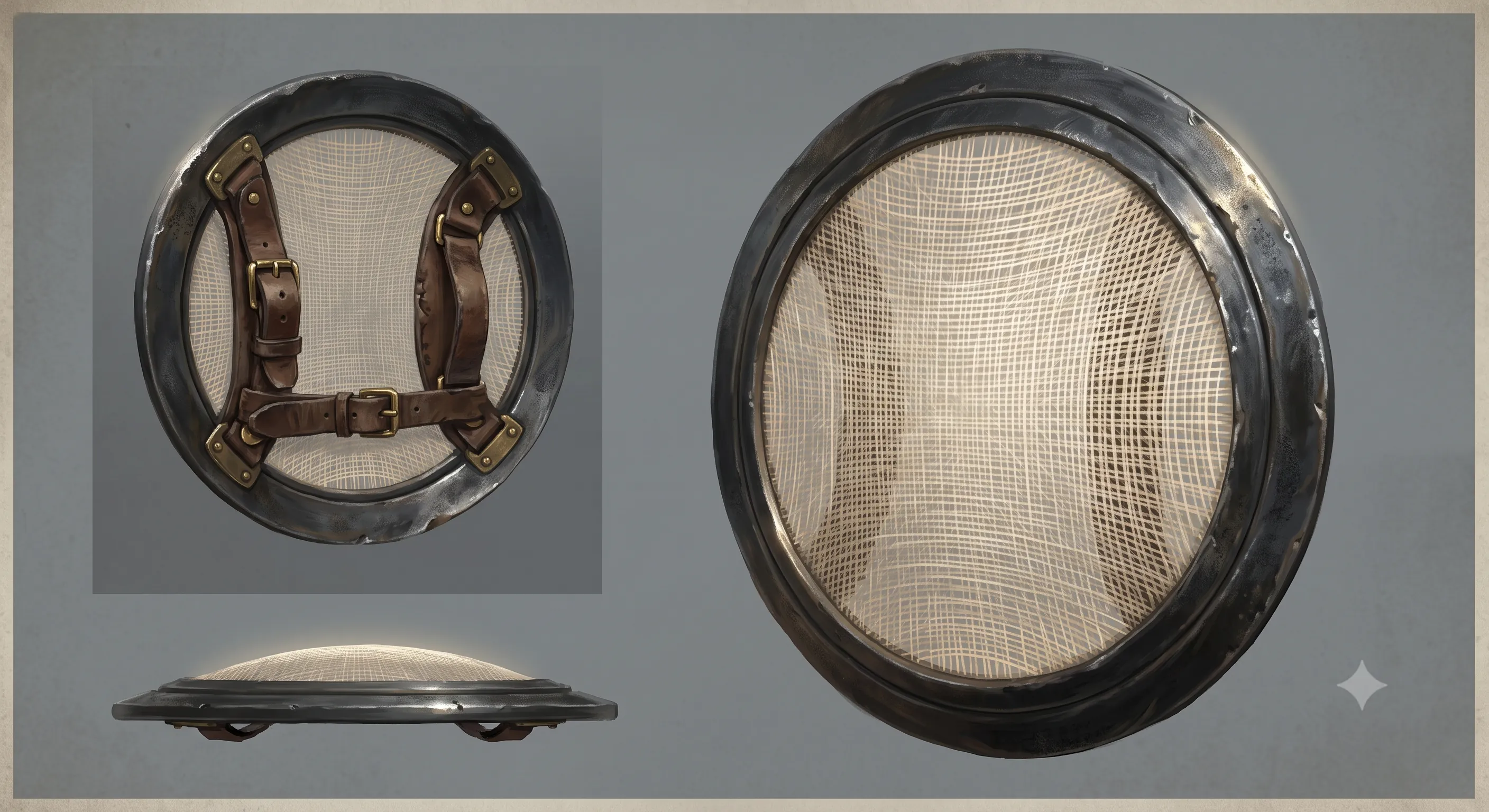
Section titled “Armor & shields”Armor uses the standard categories; the Merretian flavor is the material. Oath-metal armor carries the Oathbound property (counts as magical while the wearer’s forge-vow holds). Standing shields are stiffened by a Founding-derived bound-light filament — tech, not a Working — so a non-caster gets a magic-adjacent guard.
| Armor | Cost | AC | Category |
|---|---|---|---|
| Cinder-leather | 10 seals | 11 + Dex | Light |
| Oath-weave coat | 45 seals | 12 + Dex | Light |
| Ring-scale of drun-vel | 50 seals | 14 + Dex (max 2) | Medium |
| Foundation-plate | 75 seals | 16 | Heavy |
| Kardun oath-plate | 1,500 seals | 18 | Heavy (Oathbound) |
| Standing shield | 25 seals | +2 (bound-light) | Shield |
The Lent Grid — power, and what it costs
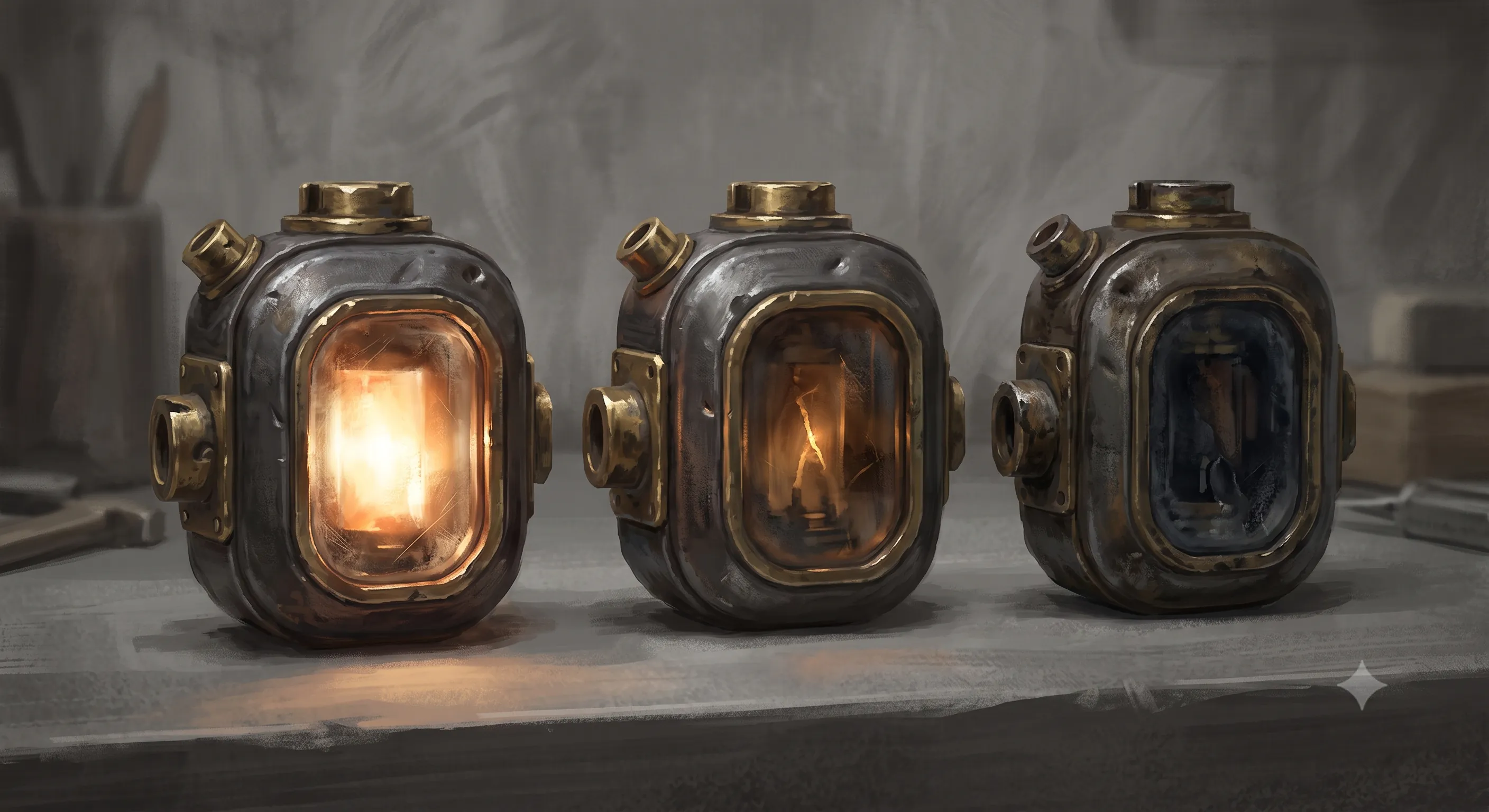
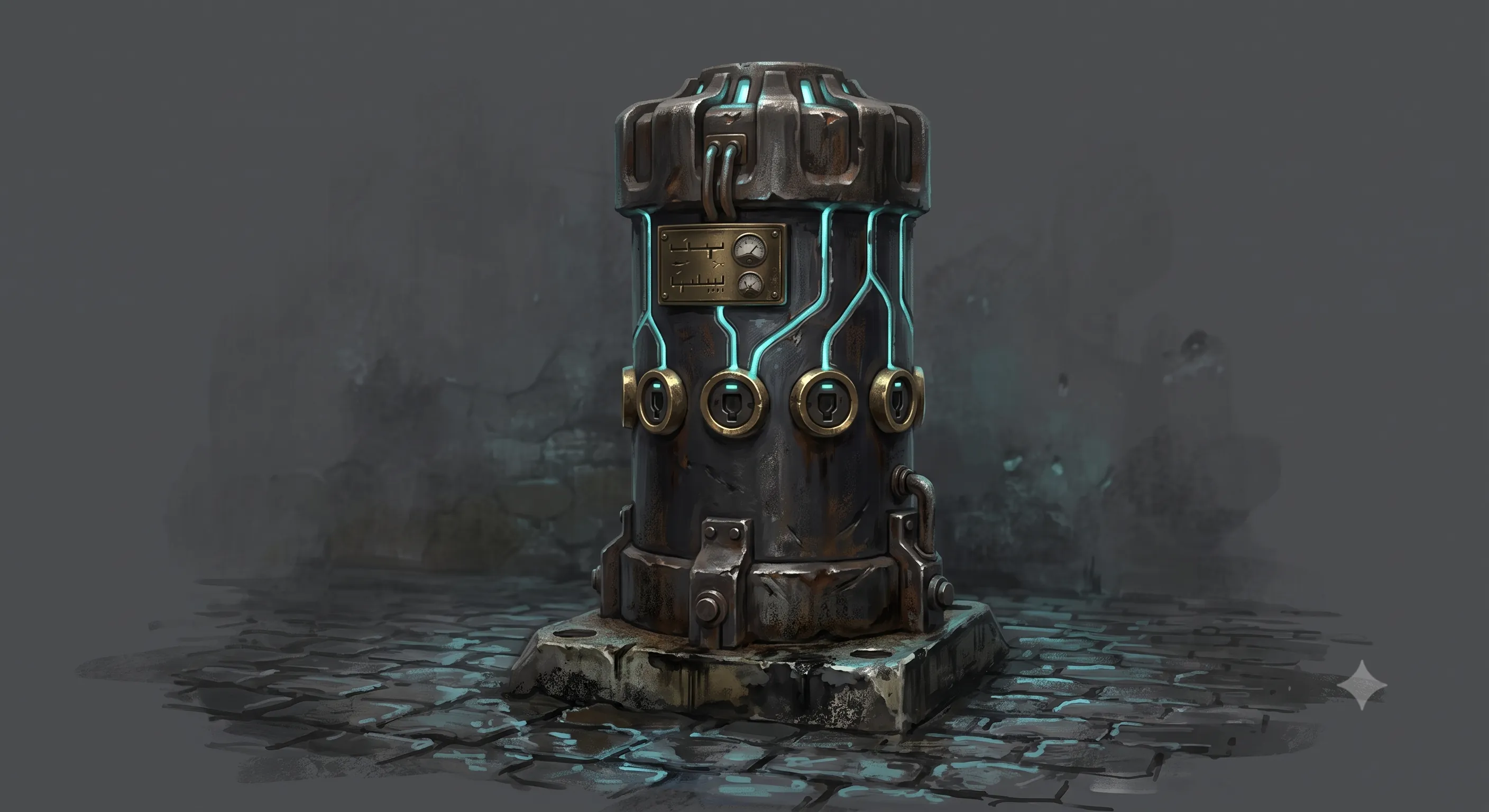
Section titled “The Lent Grid — power, and what it costs”This is the section that makes Merretian gear Merretian. Half the arms and most of the tools in this chapter run on the buried suns — the vast Founding-and-artificer generators in the deep — distributed as the city’s electric grid and carried in the field as buried-sun cells. Nothing here is fueled; it is charged, and charge is rented.
Buried-sun cells. A palm-sized cell holds a finite charge (an arc-lock’s shot count is on its table above; a lamp or tool runs for hours). Cells swap in seconds. But a cell recharges only on the grid — you cannot light a fire under it or crank a handle; it must be docked at a recharge post (ubiquitous in Sulamir, rare on the rail-line, absent past the frontier).
| Grid service | Cost |
|---|---|
| Recharge a spent weapon-cell at a public post | 1–2 marks |
| A fresh spare cell (arc-lock) | 8 seals |
| Household/workshop grid tap (per month) | 3–8 seals by district |
| Field recharge-satchel (holds & trickle-shares 4 cells) | 30 seals |
The tactical and dramatic fact: off the grid, your charged gear is on a countdown. A party that walks past the last recharge post into the homelands is counting shots — which is exactly why the frontier still runs on steel, powder, and its own two hands, and why control of the grid is the thing armies actually fight over. All light is lent, and the Lent Grid is where a player feels it every session.
Focus stones & channel-gear
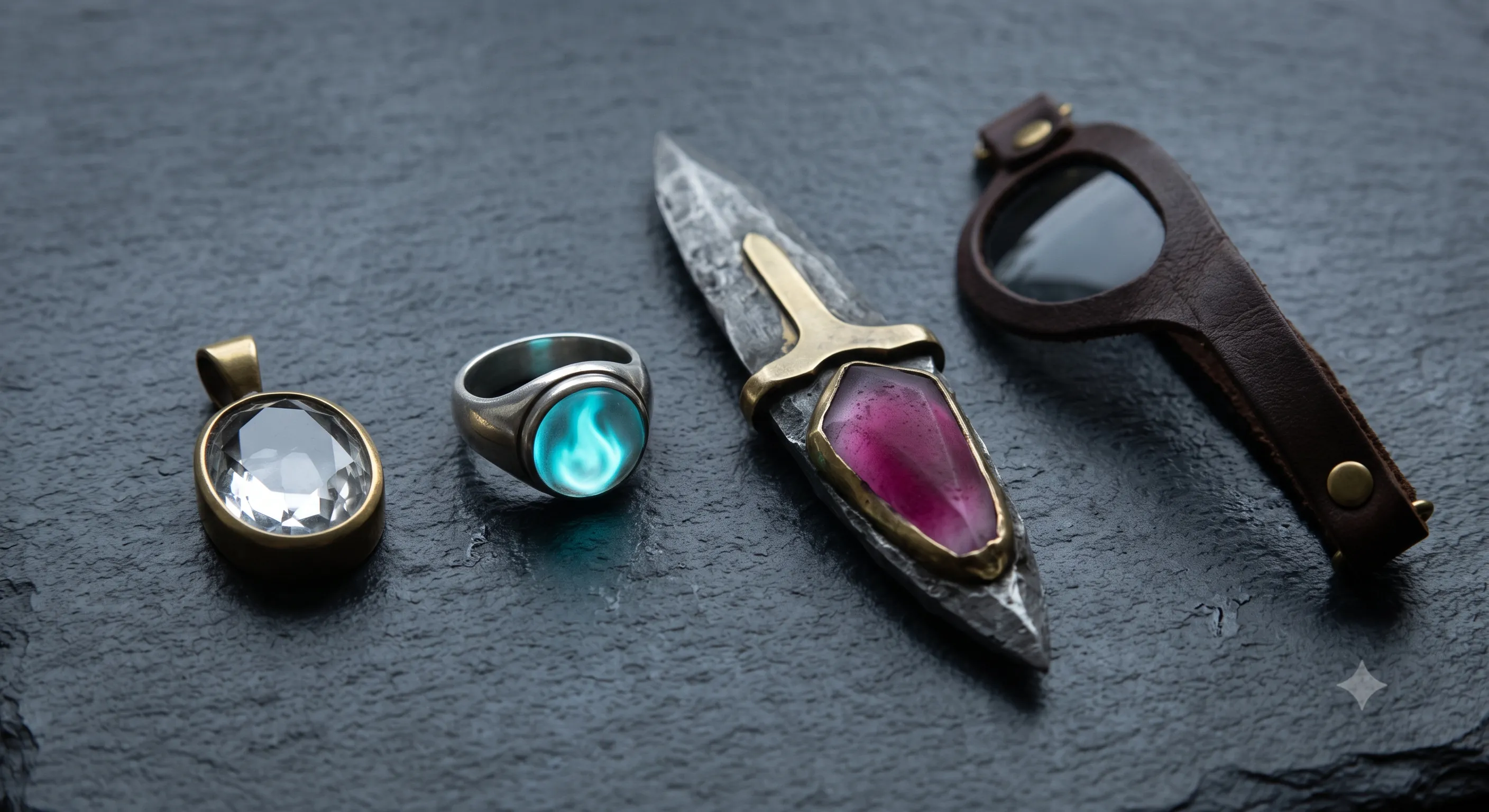
Section titled “Focus stones & channel-gear”The full rules for stones — bonding by use, the Stone-Rite anyone can perform, and stone-set gear — are Chapter 9. In brief: a practitioner’s most important possession is a focus stone — a clear crystal that takes the color of the channel run through it and lets you reach above your discipline’s base Tier (Chapter 6). Beyond the stone itself, channel-gear shades and shapes the work: settings that ease the body’s or self’s cost, lenses for the Knowing, eye-shrouds that hide the tell-tale flash so a caster can work unseen. Notable examples are catalogued as items in the Master’s Guide vault; a starting caster’s stone is part of their Calling kit, and better stones and channel-gear are among the first things they will save their seals for.
| Channel-gear | Cost | Use |
|---|---|---|
| Working focus stone (starter) | 25 seals | required to cast above base Tier |
| Cut/graded focus stone | 100+ seals | eases cost or raises a Working’s save DC |
| Eye-shroud | 20 seals | hides the casting eye-flash from watchers |
| Striker-ward slivers (dozen) | 5 seals | the dumb stone chips that stabilize arc-lock shots |
Adventuring gear, tools & packs
Section titled “Adventuring gear, tools & packs”Standard adventuring gear is available under local names (a Steam-Worker’s grip-lamp is a hooded buried-sun lantern; rail-tar, oath-cord, cinder-matches). Buy a themed outfitter’s pack to skip the itemizing:
- Wanderer’s pack (frontier travel — bedroll, rations, rope, cinder-matches, a spare cell, off-grid gear). 12 seals.
- Guildhand’s pack (city work — writing kit, seal-wax, rail-pass wallet, a lamp-cell). 10 seals.
- Warden’s pack (soldiering — mess kit, cell-satchel, whetstone, field-dressings). 14 seals.
- Delver’s pack (deep/underground — grip-lamp, pitons, oath-cord, the Kardun-country essentials). 14 seals.
Artisan and practitioner tools (smith’s, tinker’s, herbalist’s, a Knowing-scholar’s codex-kit) work by the standard rules; oath-metal artisan tools are prized heirlooms.
Mounts, vehicles & getting around
Section titled “Mounts, vehicles & getting around”Sulamir is the continent’s powerhouse and it is not a walled-off island: the magnerail (chartered by House Corveliss / Alum-sidek) runs mag-lev trains out to the other provinces for trade and travel, and buried-sun airships carry priority freight and passengers above. Personal transport ranges from bonded beasts to charged vehicles (fuller options are catalogued in the vault, ).
| Transport | Cost | Notes |
|---|---|---|
| Magnerail passage (inter-province) | 1–6 seals by distance | the ordinary way to cross the continent |
| Airship berth (priority) | 20+ seals | fast, weather-permitting, above the rail |
| Riding beast (courser, ox-dray) | 25–75 seals | frontier and off-grid travel |
| Charged wheelcart (short-range) | 120 seals | city and near-country; needs cells |
Lifestyle & services in Sulamir
Section titled “Lifestyle & services in Sulamir”Sulamir lives at a “1960s-USA” pitch — an electrified, rail-connected, consumer megacity — so lifestyle expenses read modern-adjacent under the Dome. Standard daily lifestyle tiers (wretched to aristocratic) apply; add the distinctly Sulamiri lines: a grid tap on your rooms, a rail-pass, an Iron Coin account (and its interest — the guild that lends to everyone lends to you too). Out past the frontier, none of it exists, and a party learns fast how much of their power was rented.
A note on magic items
Section titled “A note on magic items”Focus stones, channel-gear, and consumable draughts a player buys openly are here and in the vault; the Bound Relics and the wider magic-item catalogue are the DM’s to place. Remember the world’s rule when you find one: a standard item is a possession, but a relic keeps its own ledger — attuning to one is a bond, and the greatest of them collect.
Concept gallery — Signature Gear & Tech
Section titled “Concept gallery — Signature Gear & Tech”