Chapter 3 — The Peoples of Merretia
“Ask what someone is, and you are asking where they sit on the ladder that runs from the Source down to the street — and which of the two great forces got the upper hand in the making of them. Everyone here is a truce between order and chaos. Some truces just show more than others.” — Master-Cataloguer Vessa Orn
Your people is what your character is — the lineage they were born into, somewhere on the great descent from the Source and the Companion down through the gods, the angels and daemons, and the human line. It is not your class, and in Merretia it is never simply a bundle of bonuses.
Two rules shape every people in this chapter:Your people grants traits, not ability scores. Under our rules (Chapter 10), your ability-score increases come from your Origin (Chapter 5), not your lineage. A people gives you a size, a speed, and a handful of traits — what your blood can do and what it costs you. This is deliberate: your people is what you are, your origin is what you became good at.
Every people is a compound — a tilt and a crack. Nothing below the two primordial forces is pure. So every people has a signature trait that expresses its tilt toward Order or Chaos, and a crack (or leak) that expresses the opposite pole it cannot be rid of. The crack is not a penalty to play around — it is the truest thing about the people. An Order-tilted people leaks chaos at one point of pressure; a chaos-tilted people is held by a law stricter than any court. Lean into it.
How to read a block: each people lists its creature type, size, and speed, then its named traits — the signature first, the crack marked as such — and its languages. Everyone speaks Sulamiri, the common tongue of the city.
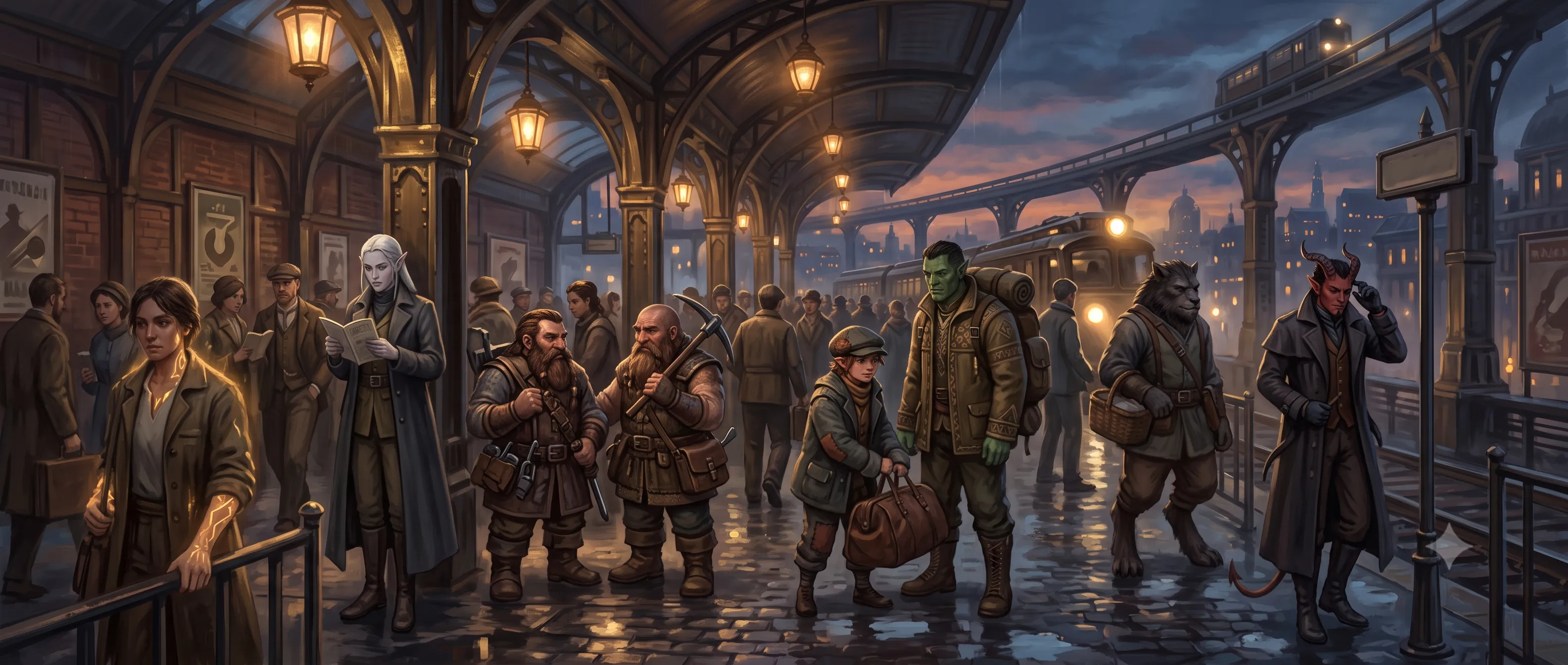
The peoples come in two groups. The Common Peoples are the familiar picks, the lineages a table expects at character creation. The Rare Lineages are the exotic and constrained peoples — vampires, the woken constructs, the collective folk, the border-people who chose to forget — playable, each with a note on how one of them comes to be an adventurer at all, usually with your GM’s blessing.
Part One — The Common Peoples
Section titled “Part One — The Common Peoples”THE HUMAN
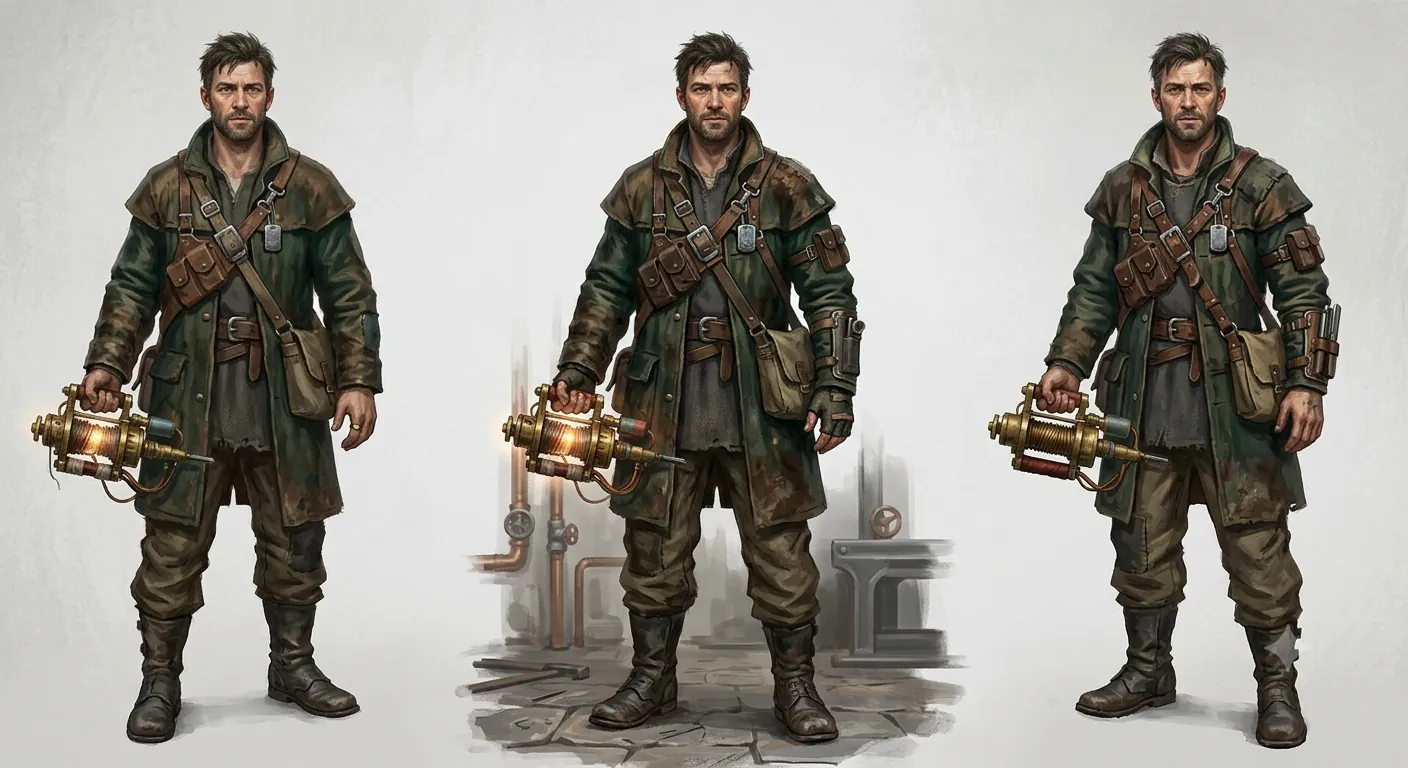
Section titled “THE HUMAN”The emanation-ladder’s end; no fixed discipline, no fixed shape — the canvas every other people is drawn against. Creature Type: Humanoid · Size: Medium · Speed: 30 ft
- Diffuse Faith — you have no bound discipline, so you bend toward all of them a little: choose one skill proficiency, and once per long rest you may reroll one ability check, attack roll, or saving throw and take the new result.
- Quick Study — proficiency with one additional tool, instrument, or language of your choice, reflecting the human habit of picking up whatever the moment demands.
- The Open Hand (the leak, inverted) — humans carry no innate resistance, sense, or Working. This is not a hidden cost; it is the actual shape of the people. In exchange, your background’s ability score increases and origin feat land on a frame with no discipline-tax subtracted from them anywhere else.
- Languages: Sulamiri, plus one additional language of your choice.
Playability note: Human is the balance anchor for this cluster — every other people’s traits should read as roughly equal to this one skill + one utility proficiency + one reroll/rest.
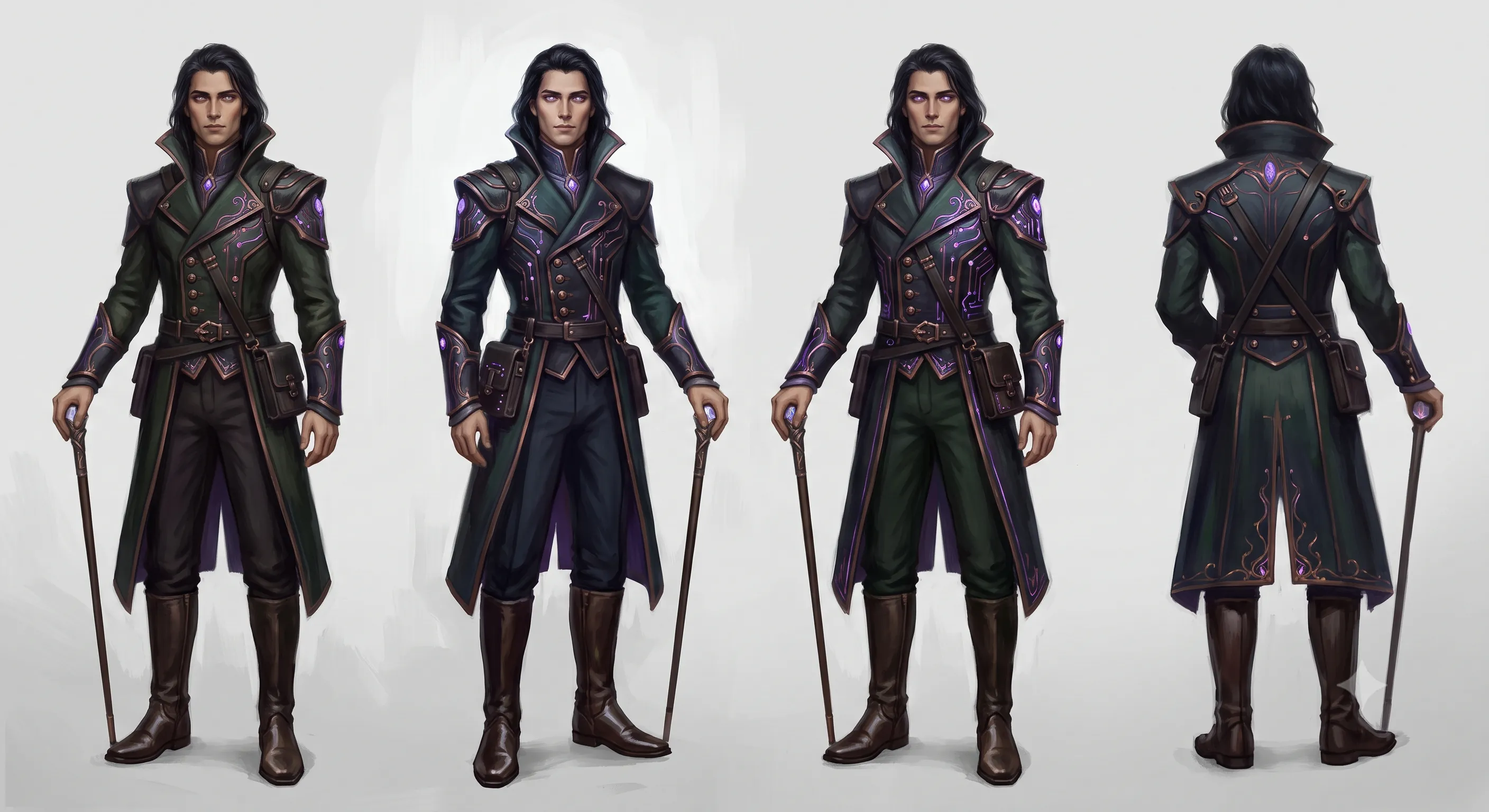
THE SULEVRI (elf)
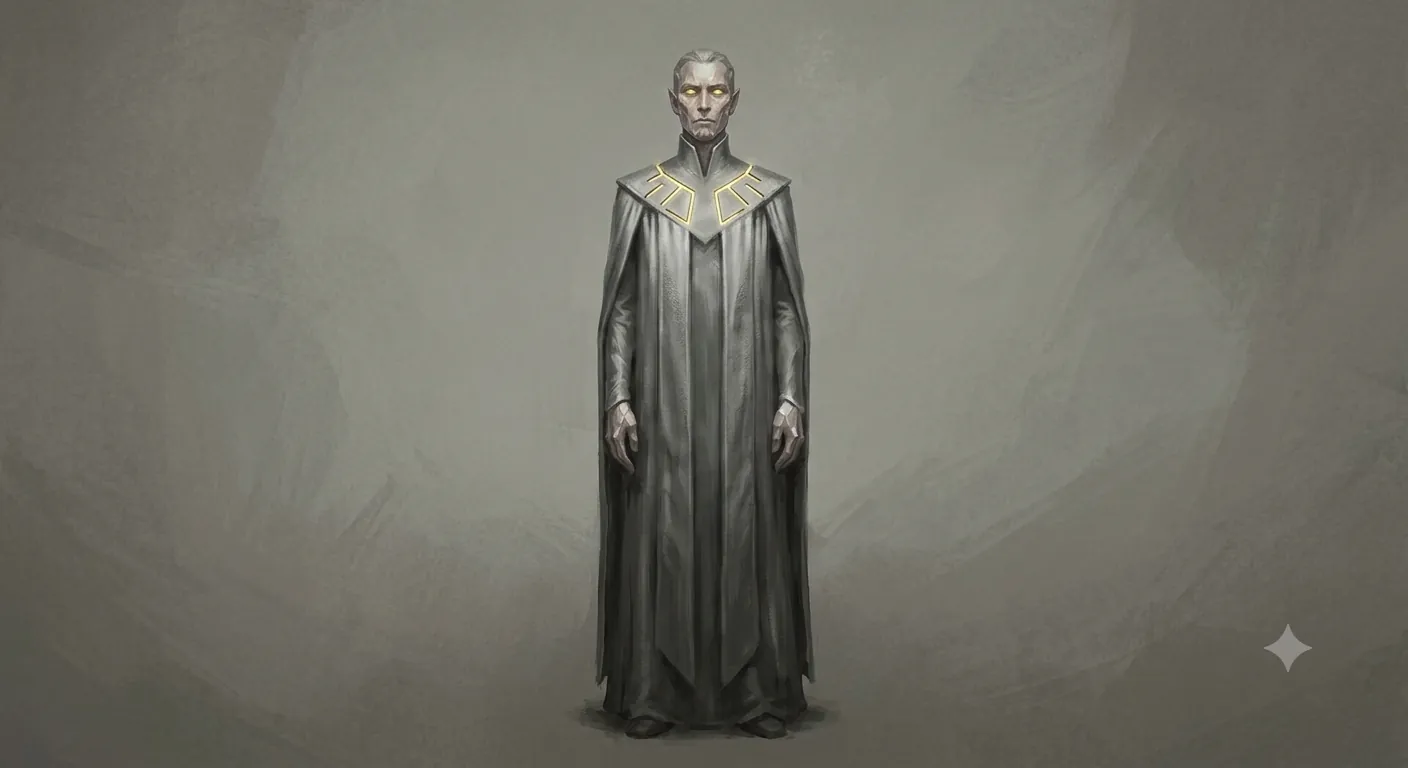
Section titled “THE SULEVRI (elf)”Order made flesh in cold, harmonic lines — until the one thread it cannot bind straight. Creature Type: Humanoid · Size: Medium · Speed: 30 ft
- Harmonic Witness (signature) — trained from the cradle in Binding’s grammar. You have proficiency in Insight, and when you witness an oath, contract, or vow being sworn, you may mark it: a number of times per long rest equal to your proficiency bonus you may mark an oath this way, and while a mark holds you always know afterward if that oath has been broken.
- Clean-Line Aging — you don’t sicken from age the way humans do and need no sleep, only 4 hours of Binder-trance (still grants full rest benefit); resistance to poison damage.
- The Am-Thread (the crack) — once your heart truly fixes on a person, oath, or place, the bond is absolute and cannot be voluntarily released. Upside: you have advantage on attack rolls, saving throws, and Charisma checks made in direct defense of your bonded person/oath/place. Hook: the GM may compel a failed save (fear, deception, a forced choice) whenever an action would require you to abandon, doubt, or act against that bond — you resist as hard as you’re able, but the thread does not break.
- Languages: Sulamiri, Mal’akhi (the old Binder-tongue).
THE HALF-SULEVRI (half-elf)
Section titled “THE HALF-SULEVRI (half-elf)”Two lineages, one thread — burning without the law that was built to hold it. Creature Type: Humanoid · Size: Medium · Speed: 30 ft
- The Uncaged Thread (signature) — you carry the Am-thread early and unshielded, without Sulevri Binder-discipline to contain it. Choose one person, place, or ideal at character creation as your fixation: a number of times per long rest equal to your proficiency bonus, you have advantage on a check or save made in its pursuit or defense, but the GM may compel a failed save whenever circumstances pull you away from it (with no limit on this compel) — faster and more often than a full Sulevri, since nothing in you restrains the pull.
- Between-World Cadence — proficiency in two skills of your choice (reflecting a childhood split across two cultures), and you don’t need to sleep, only 4 hours of light trance for a full rest’s benefit.
- Long Ember (the trade) — you age markedly slower than a human but faster than a Sulevri, and you lack Sulevri cold-resistance to poison; instead you have advantage on saves against being charmed.
- Languages: Sulamiri, plus one language from either parent lineage.
THE KARDUN (dwarf)
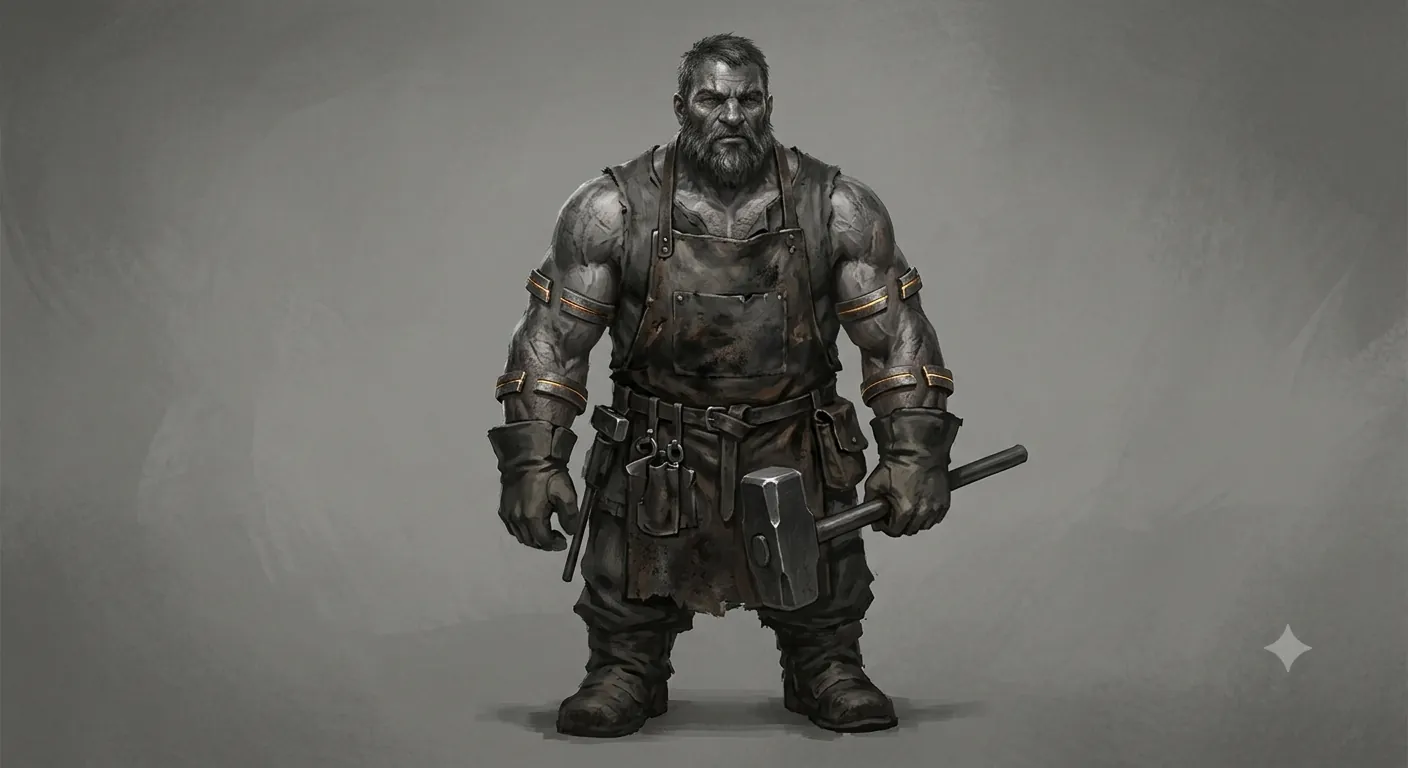
Section titled “THE KARDUN (dwarf)”Pre-Founding stone with no magic in its blood at all — until the Old Hunger comes due. Creature Type: Humanoid · Size: Medium (dense, not short) · Speed: 25 ft
- Stone-Dense Frame (signature) — your bones and build carry pre-Founding density: resistance to poison damage, and advantage on saving throws and checks to resist being moved, knocked prone, shoved, or grappled.
- Deep-Sight & Oath-Metal — darkvision 60 ft; proficiency with smith’s tools; proficiency with your choice of battleaxe, handaxe, light hammer, or warhammer.
- The Old Hunger (the leak) — once per long rest, you may enter a creative fever for up to 10 minutes: advantage on one type of ability check (Intelligence or Wisdom, your choice at the time) tied to crafting, appraising, or reading structure/mechanism. Hook: the fever is involuntary in origin — the GM may trigger it unbidden when you’re near unclaimed raw material, a ruin, or an unsolved mechanism, and once it’s running you must make a DC 13 Wisdom save to disengage from the work before it’s finished.
- No Magic-Blood — Kardun have no innate spellcasting, cantrip, or minor Working of any kind; they are built to be played as a full non-caster, and no trait above grants an exception.
- Languages: Sulamiri, Kardun-tongue (the oath-metal script).
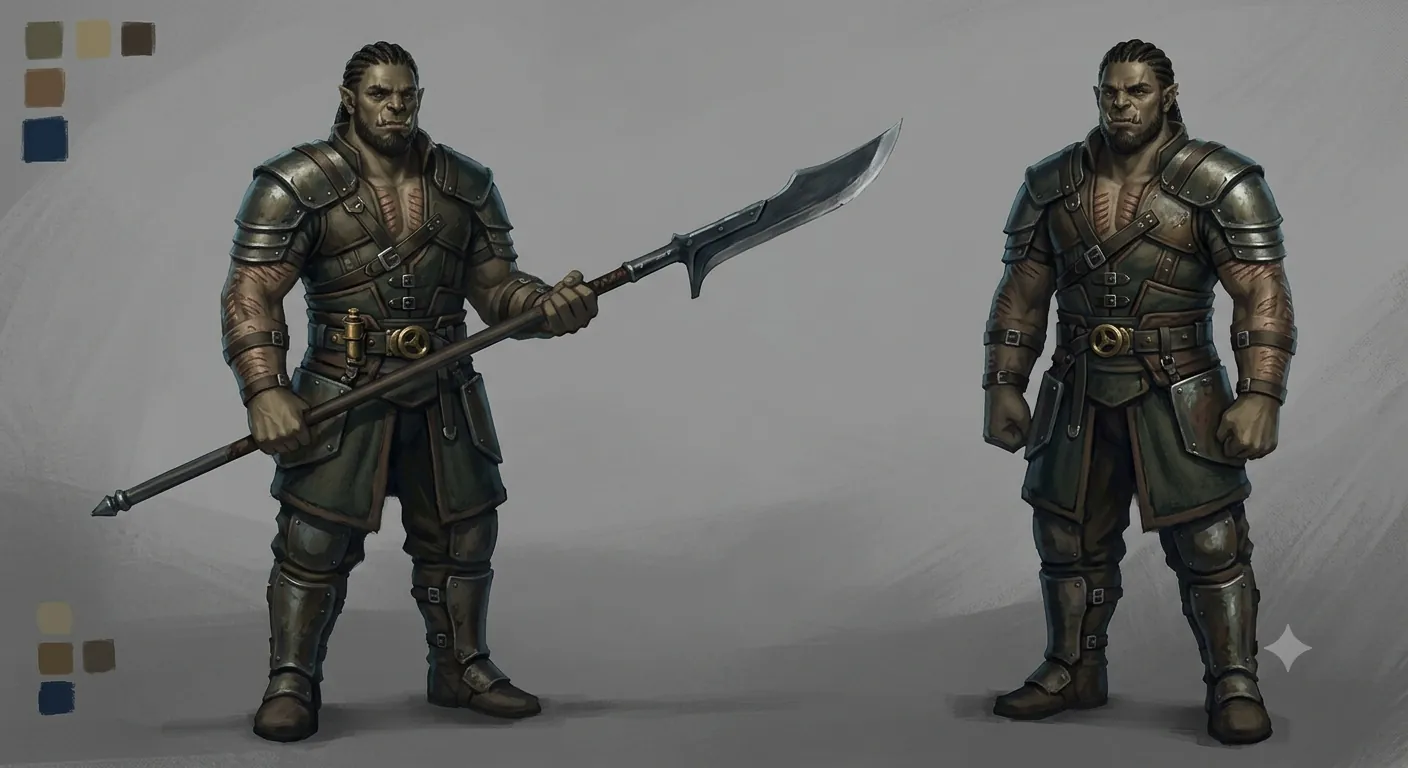
THE HALKARI (orc / half-orc)
Section titled “THE HALKARI (orc / half-orc)”War-ferocity bound by a vow you can feel in your bones. Creature Type: Humanoid · Size: Medium · Speed: 30 ft
- The Red Count (signature) — When you drop to half your Hit Point maximum or lower, once per long rest you may act as a bonus action to enter the Count: until the end of your next turn, you deal an extra 1d6 damage on weapon hits and have advantage on saving throws against being frightened. The Count ends early if you fall unconscious.
- Powerful Build — You count as one size larger when determining carrying capacity, push/drag/lift limits, and for the purpose of contests to grapple or shove.
- The Stand (the crack) — At the start of a combat or a quest, you may swear a specific Stand aloud (e.g., “none pass this door,” “I carry the wounded first”). While you keep it, gain a +1 bonus to Wisdom (Insight) and Charisma (Intimidation) checks made to hold your ground or command respect. If you break the Stand, you suffer disadvantage on all attack rolls and Constitution saving throws until you rest a full day and perform a small rite of atonement — the vow’s weight is physical, not just social.
- Languages: Sulamiri, Halkar-tongue.
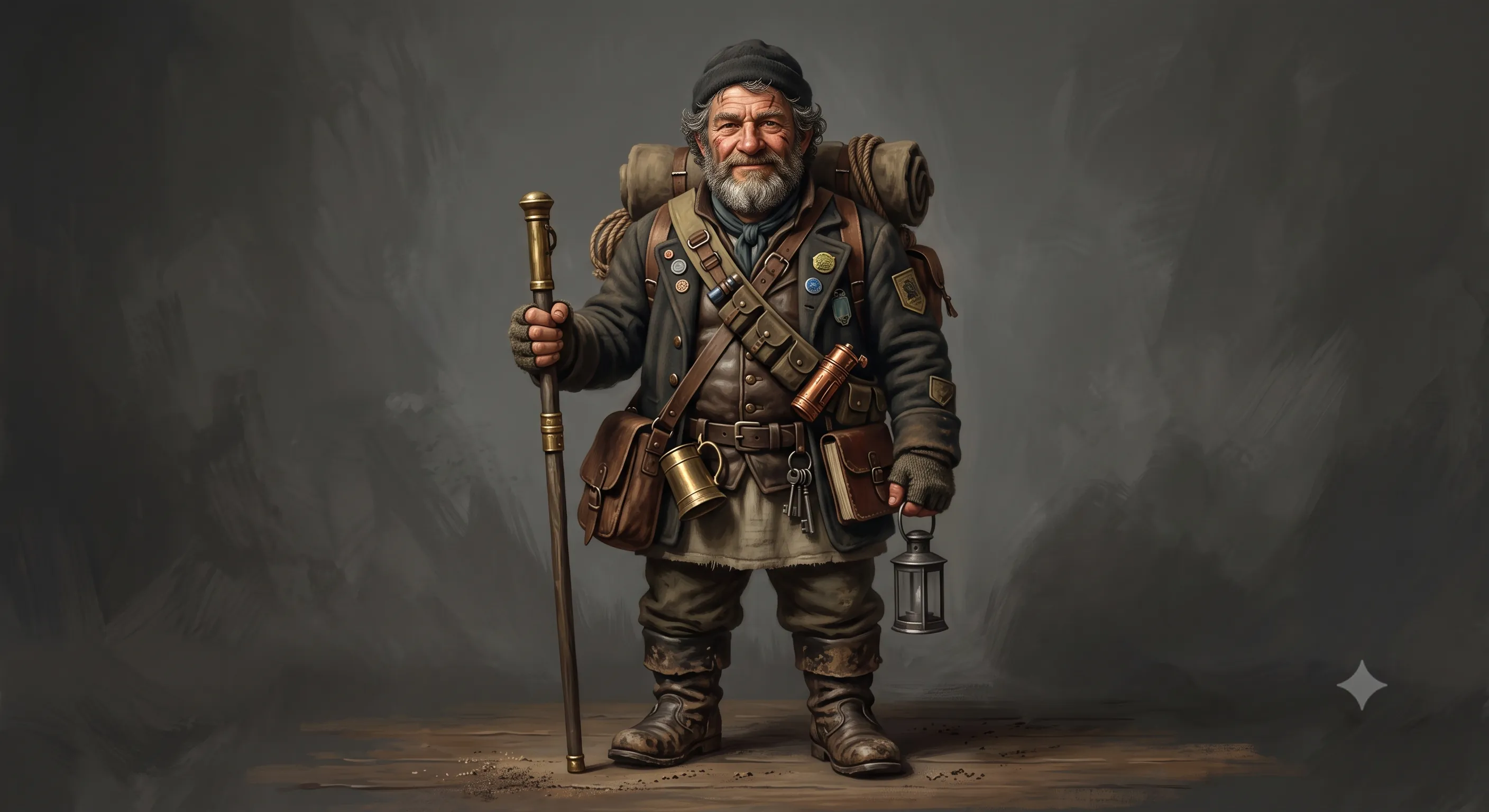
THE PIVREN (halfling)
Section titled “THE PIVREN (halfling)”A people carried by luck they never chose to have. Creature Type: Humanoid · Size: Small · Speed: 25 ft
- The Margin (signature) — A number of times per long rest equal to your proficiency bonus, when you roll a 1 on an attack roll, ability check, or saving throw, you may reroll it and must use the new roll. For each other Pivren (or a creature you’ve spent at least 1 minute in comforting/aiding this scene) within 10 feet of you when you do, the reroll instead gains a cumulative +1, to a maximum of +3. You cannot invoke the Margin at will — it triggers only on the failed roll itself, never proactively.
- Steady Nerve — You have advantage on saving throws against being frightened, and you are never at disadvantage from being Small when wielding weapons.
- Hearth-Law (the crack) — While you have given or received hospitality (shared food, shelter, or aid) with a creature within the last 24 hours, you have advantage on Wisdom (Insight and Perception) checks concerning them. But if you refuse a genuine request for hospitality you’re able to grant, or violate hospitality given to you (betray a host or a guest), the Margin will not trigger for you until you make it right — the luck is communal, and it withdraws from those who break the reciprocity it depends on.
- Languages: Sulamiri, Pivrenic.
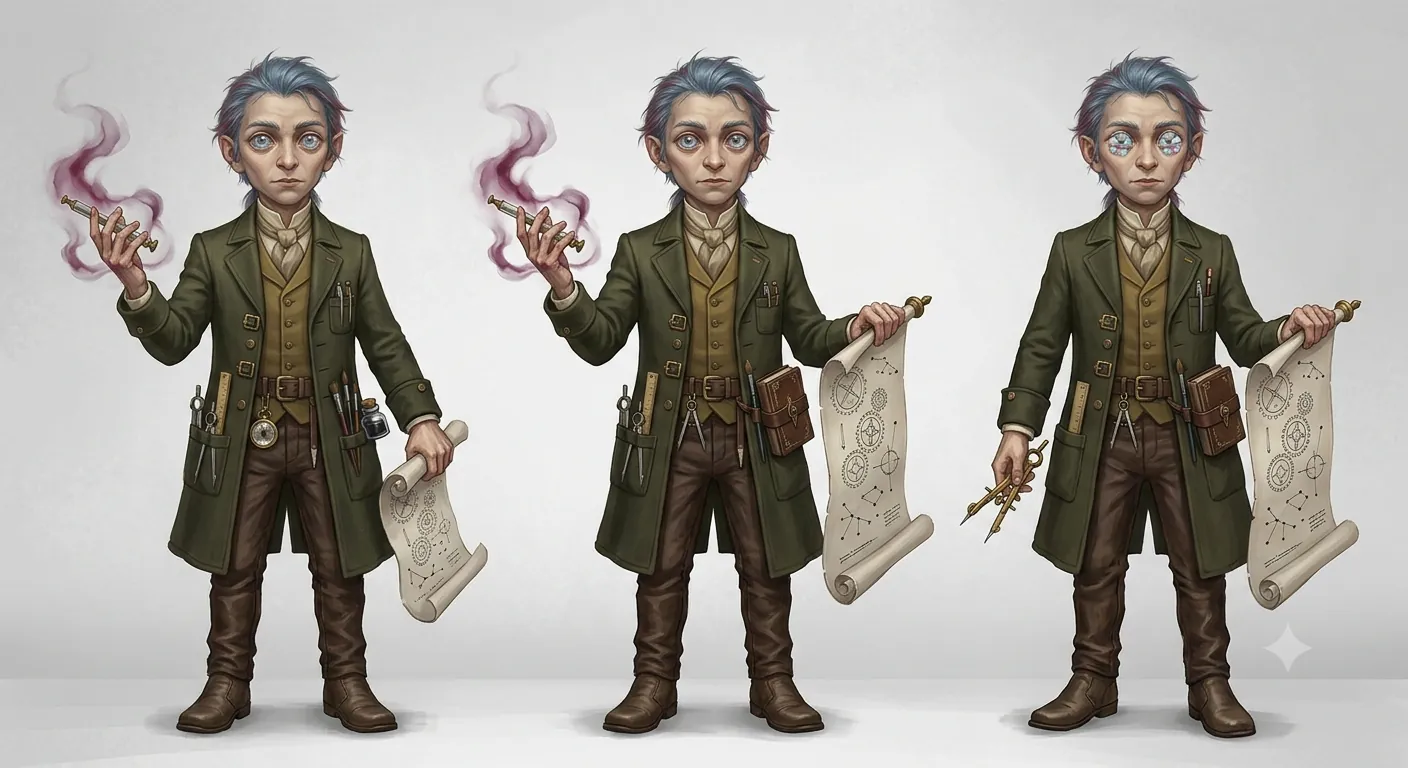
THE FENDRIK (gnome)
Section titled “THE FENDRIK (gnome)”A mind built for exactness, undone by its own heat. Creature Type: Humanoid · Size: Small · Speed: 25 ft
- The Ledger-Mind (signature) — You have advantage on saving throws against any spell or magical effect from the Knowing discipline (illusion/divination-adjacent). You have proficiency in one Intelligence-based skill of your choice and with one type of artisan’s tools of your choice.
- Cracked Prism — Your eyes show faint shifting color. You know the Minor Illusion cantrip (Knowing-flavored); once you cast it this way, you can’t do so again until you finish a short or long rest, unless you spend 1 Fray to cast it again.
- The Leak (the crack) — When you experience a surge of strong emotion (GM’s call — panic, fury, grief, giddy triumph), you involuntarily bend light and sound in a 10-foot radius around you for 1 minute: mundane sounds mute or double, shapes blur at the edges, colors run. Any witness who tries to later recall exactly what happened in that space has disadvantage on the check (Insight/Investigation) to do so, including you — you are not exempt from your own unreliability. While the leak is active, the distortion works against you too: you have disadvantage on your own Stealth and Perception checks made within the radius.
- Languages: Sulamiri, Fendrik-cant (a dense technical argot).
THE MAL’AKHA (Aasimar)
Section titled “THE MAL’AKHA (Aasimar)”Order wearing skin — a lattice of light bound just under the surface, humming when the world goes quiet. Creature Type: Humanoid · Size: Medium · Speed: 30 ft
- Kindled Lattice (signature) — resistance to radiant damage; the lattice casts dim light in a 5-ft radius that you can suppress or reveal at will. Once per long rest, as an action, lay a hand on a creature to grant it 1d4 temporary hit points or advantage on its next saving throw.
- Ledger Sight — darkvision 60 ft; proficiency in Insight, and advantage on checks made to tell whether a spoken vow or oath is being kept.
- Going to Glass (the leak) — once per long rest, when you drop to half your hit point maximum or are overwhelmed by grief/rage/joy, you may (or the GM may compel you to) discharge: each creature within 10 ft takes 2d6 radiant damage (save for half, your choice of DC method by table), but the flare is visible for a mile, ends any stealth, and leaves you unable to suppress your light again until you finish a long rest.
- Languages: Sulamiri, Malakh-script (Celestial-equivalent).
THE MAL’AKHAHAM (Tiefling)
Section titled “THE MAL’AKHAHAM (Tiefling)”Chaos wearing skin — a stain that bleeds through whatever you put over it, and the most rule-bound people in Merretia because of it. Creature Type: Humanoid · Size: Medium · Speed: 30 ft
- Stain-Through (signature) — resistance to necrotic damage; you can cast a minor Chaos knack (Thaumaturgy or Minor Illusion, your choice at creation) at will, no components.
- Dream-Dark Eyes — darkvision 60 ft; proficiency in Deception or Persuasion (choose one).
- The Personal Law (the crack) — at creation, write one private, rigid rule you hold yourself to (never lie to kin, never draw blood first, never flee a debt, etc.). While you have kept it since your last rest, once per rest gain advantage on one attack roll, save, or check. The first time in a session you knowingly break it, you gain disadvantage on all checks of that same kind until you atone or complete a long rest.
- Languages: Sulamiri, Low Abyssal-cant (Chaos-market pidgin).
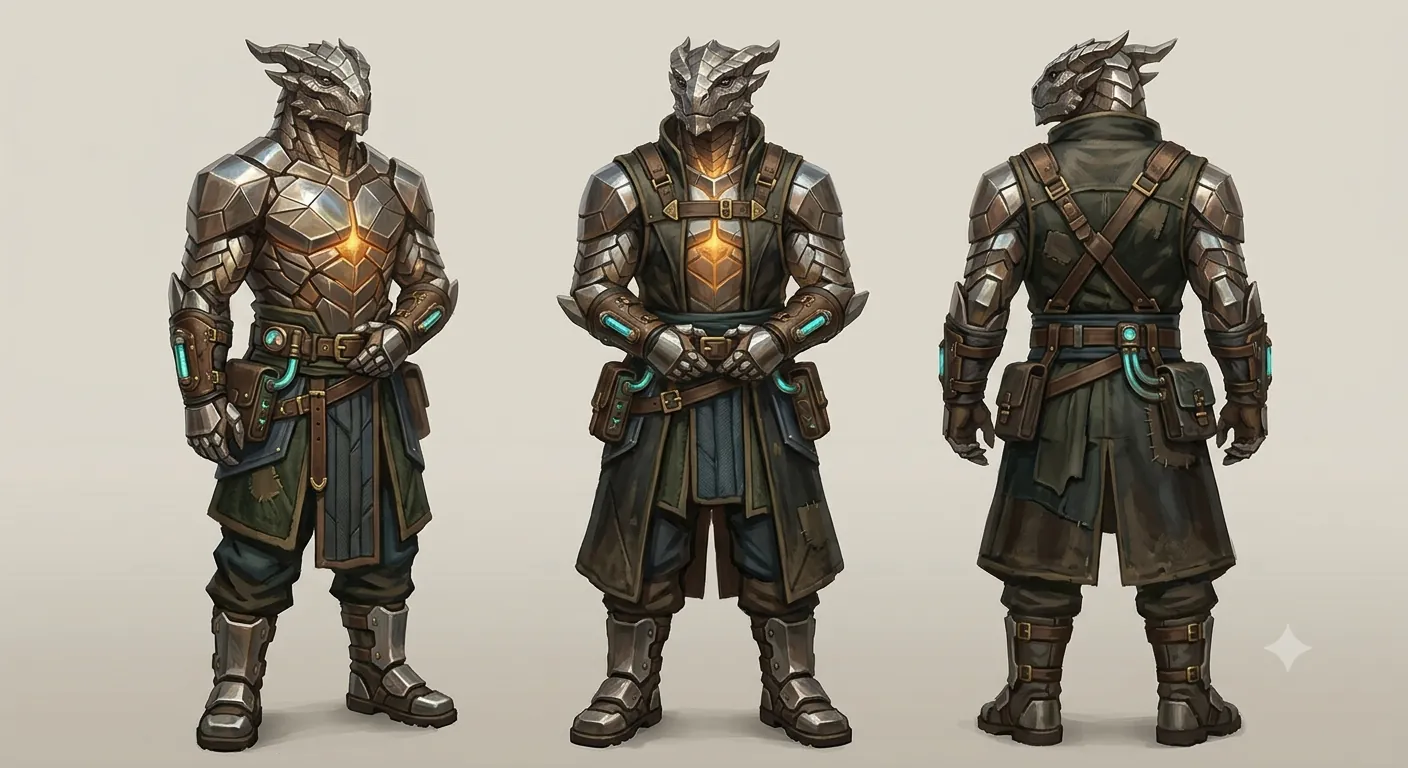
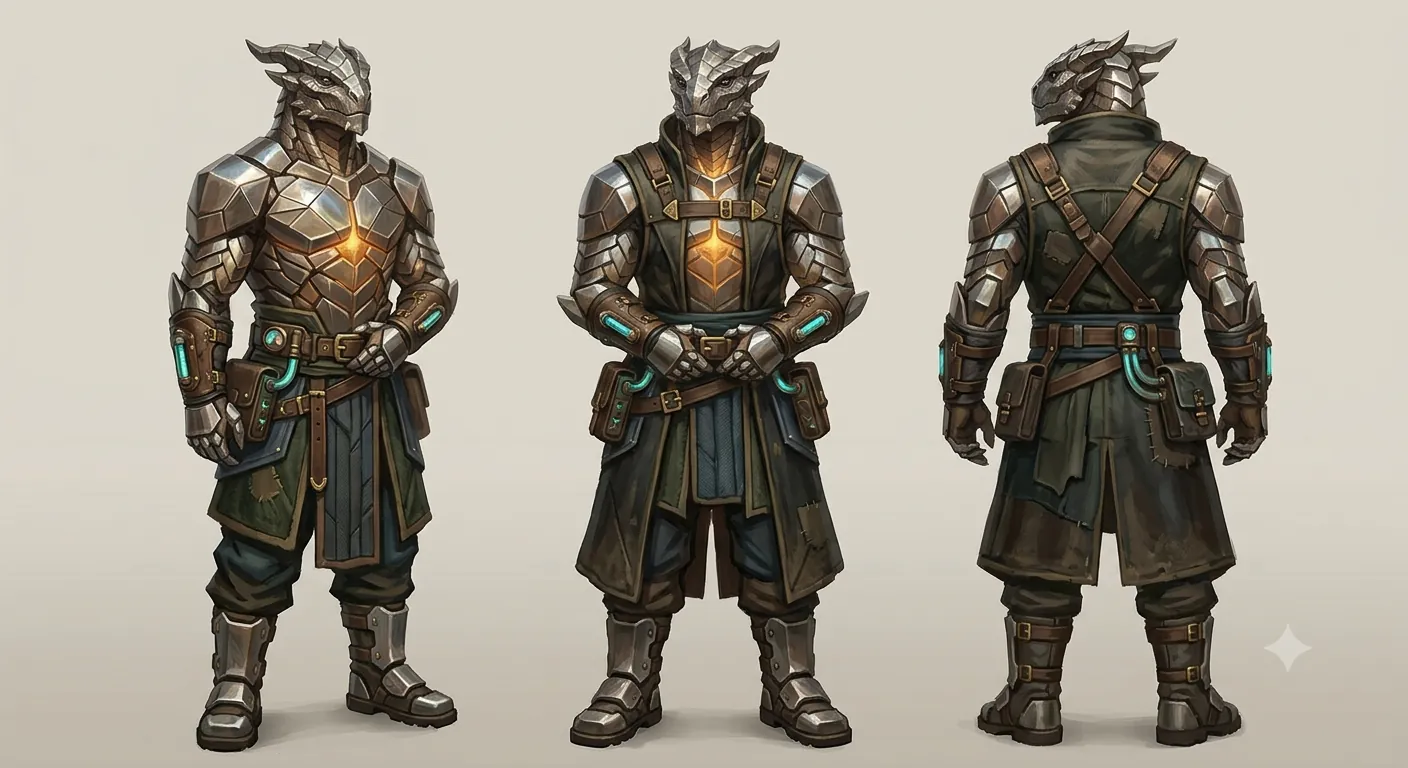
THE ZAR’ETHIN (Dragonborn, Zar’ethis-descended)
Section titled “THE ZAR’ETHIN (Dragonborn, Zar’ethis-descended)”Contracted at birth to an ancestor dragon; a second heart beats under the first, and it does not like to be ignored. Creature Type: Humanoid · Size: Medium · Speed: 30 ft
- Second Heart (signature) — you have advantage on death saving throws, and exhaustion levels you gain are reduced by one (minimum 1).
- Ancestor’s Breath — a breath weapon (as 5e dragonborn: line or cone, damage die by size of ancestor, save DC 8 + Con mod + prof) whose element is fixed by your ancestor’s tilt (metallic ancestors: thunder or radiant; chromatic ancestors: acid, poison, fire, cold, or lightning). Resistance to that damage type. Recharges on a short or long rest.
- The Safety Valve (the leak) — the breath is a pressure valve, not just a weapon: if you go a full long rest without venting it (in combat, ritual, or open air), you gain one level of exhaustion from the strain, which clears only once you finally vent. Venting is never a quiet, free release: a discharge always announces itself — a roar and a flash that draws attention, scorches or cracks the terrain around you, and cannot be hidden — so you cannot simply bleed off the pressure unnoticed right before a rest to dodge the strain.
- Languages: Sulamiri, Draconic (ancestor’s dialect).
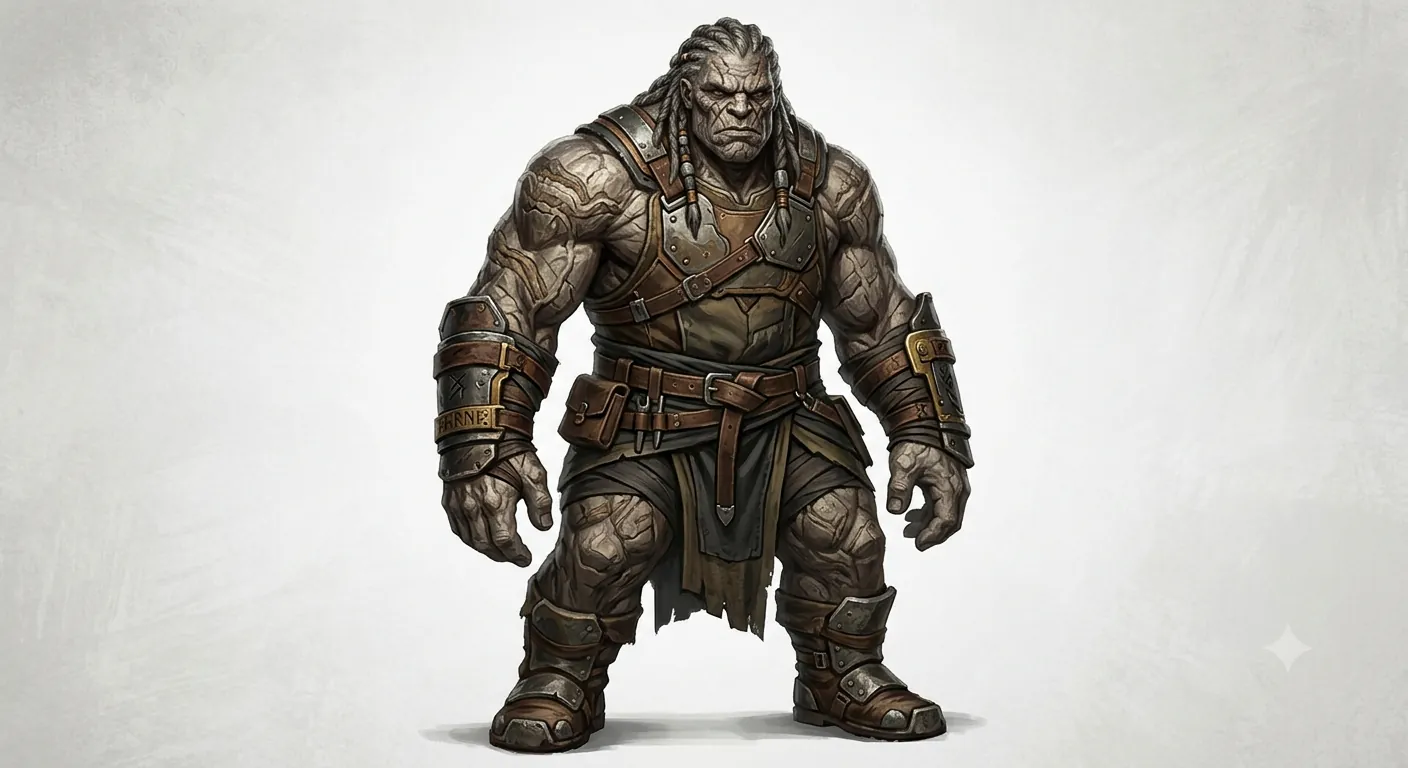
THE OSKARI (Goliath)
Section titled “THE OSKARI (Goliath)”Weight-angels in miniature — stone-skinned, mountain-built, and their trials write themselves into their flesh whether they like it or not. Creature Type: Humanoid · Size: Medium (built like a small giant) · Speed: 30 ft
- Stone-Bound Frame (signature) — you count as one size larger when determining carrying capacity and the weight you can push, drag, or lift, and you have advantage on saving throws and checks made to avoid being knocked prone, grappled, or forcibly moved.
- Weight-Angel’s Endurance — when damage would reduce you to 0 hit points but doesn’t outright kill you, you drop to 1 hit point instead. This shares a single once-per-long-rest use with Scripture Skin’s surge (below): spending either spends both, and both recharge together on a long rest.
- Scripture Skin (the crack) — once per long rest (the same use as Weight-Angel’s Endurance — using one spends the other), when you’re at half hit points or below, you may trigger a surge: gain temporary hit points equal to your level and advantage on your next save. Each surge permanently etches a new vein of stone scripture into your skin, visibly telling the story of that trial — you have disadvantage on Deception checks about your own past, since your history is, quite literally, written on you. The fresh etching also stiffens you as it sets: you have disadvantage on your next Dexterity saving throw after the surge triggers.
- Languages: Sulamiri, Old Weightspeech (Binding-liturgy dialect).
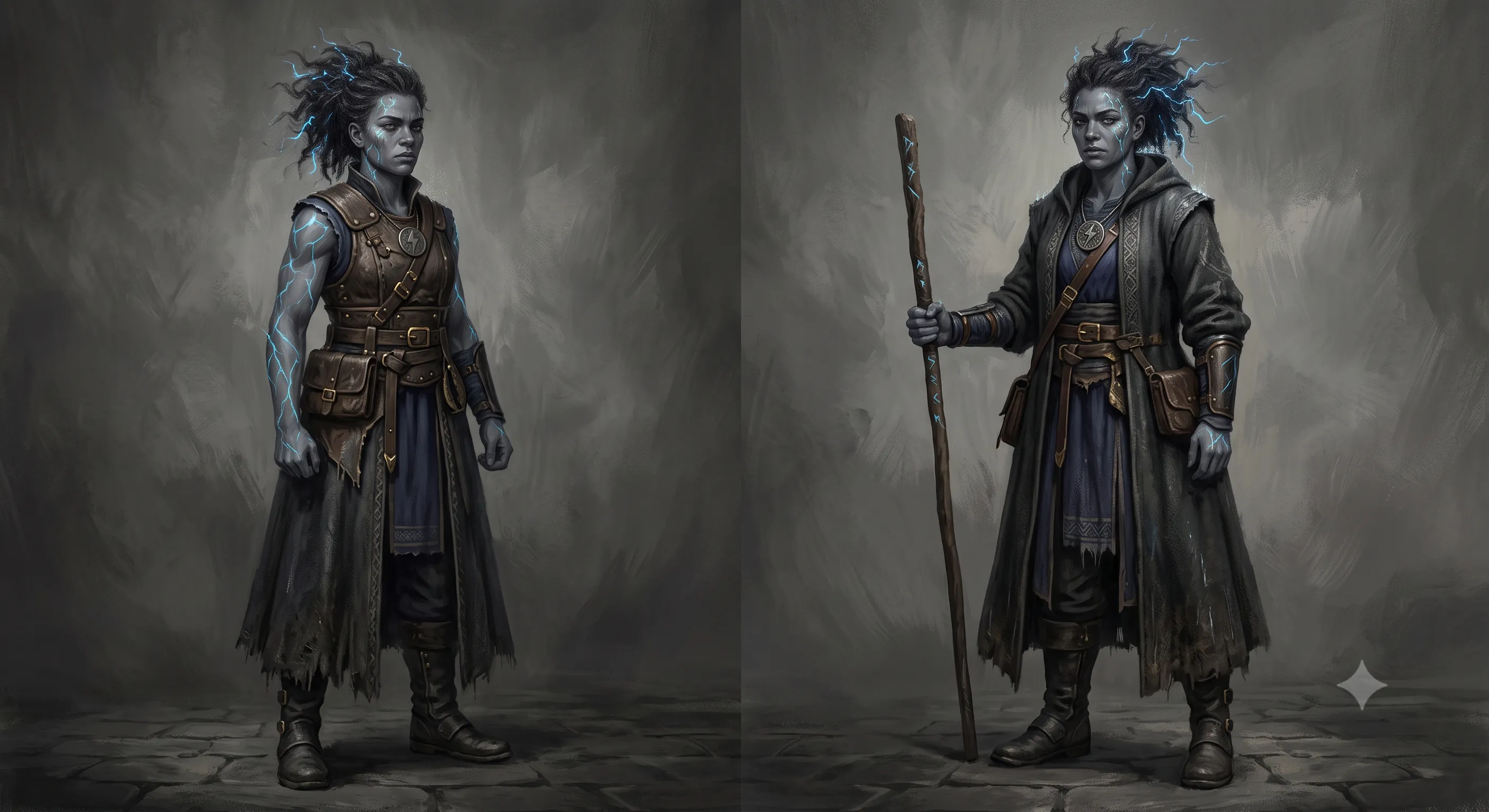
THE VIRRASTI (Storm-Veined, Genasi-equivalent)
Section titled “THE VIRRASTI (Storm-Veined, Genasi-equivalent)”Scarred by the world before birth — the Current-touched are the canonical branch, but the scarring can take any of four shapes. Creature Type: Humanoid · Size: Medium · Speed: 30 ft
- Discipline Scar (signature) — at creation, choose the discipline that scarred you: Weight (resistance to bludgeoning from falling/crushing, knack: Mold), Current (resistance to lightning, knack: Shocking Grasp-equivalent), Unmaking (resistance to acid, knack: minor Decay touch), or Growing (resistance to poison, knack: Druidcraft-equivalent). Your knack is castable once per short rest at no cost; beyond that you may use it at-will as a cantrip-tier effect, but each such extra casting costs 1 Fray. Your skin, hair, or eyes carry a visible marbling in your discipline’s color.
- Weathered — you don’t require food, water, or a controlled climate to avoid exhaustion from exposure to your discipline’s native environment (storms, quarries, bogs, or wilds, as applicable).
- Unrited Charge (the leak) — your scar needs periodic release through communal rite with kin. If you go more than a few days without one, you become unrited: you gain disadvantage on saves against your own discipline’s effects and disadvantage on Concentration saves until you complete a rite or a long rest in the presence of another Storm-Veined.
- Languages: Sulamiri, Current-cant (elemental sign-tongue).
THE VULKATHRI (Beastfolk)
Section titled “THE VULKATHRI (Beastfolk)”Growing’s peacetime work — quick, keen, and bound to their totem-kin by a law stricter than any court’s. Creature Type: Humanoid · Size: Small or Medium (player’s choice) · Speed: 35 ft (the beastfolk’s fleet-footedness is intentional — Growing bred them quick, and the extra 5 ft is a deliberate signature of the people, not an oversight)
- Nine Lives (signature) — a true Growing-debt: once in your character’s life, when you would drop to 0 hit points, you instead stabilize at 1. This is a loan, not a gift — your clan’s totem-keeper tracks it, and the debt must be repaid through service, quest, or sacrifice determined by the GM. That repayment is narrative aftermath, not a recharge: the trait is spent for the life of the character, and settling the debt does not let you draw on it again.
- Vulkathri Grace — advantage on Athletics checks to climb or jump; advantage on Perception checks that rely on hearing or smell; natural claws or beak dealing 1d4 slashing/piercing on an unarmed strike.
- Totem-Bound (the crack) — you’re held by your clan’s kinship code, an externally-imposed law (never harm a totem-sibling, never hunt your kin-beast, never abandon a hunt-partner, etc., set by clan at creation). Breaking it knowingly gives you disadvantage on Wisdom and Charisma checks until you atone with your clan or complete a long rest under a totem-keeper’s blessing.
- Languages: Sulamiri, Totem-cant (beast-sign shared across clans).
Playability note: Nine Lives is deliberately once-per-lifetime, not once-per-rest — treat the resulting debt as an ongoing plot hook, not dead weight; a GM should surface a repayment opportunity within a session or two of it triggering, not let it linger as unfinished business.
Part Two — The Rare Lineages
Section titled “Part Two — The Rare Lineages”Exotic and constrained peoples, playable with your GM’s blessing. Each carries a playability note — how a member of a people this bound, this collective, or this strange comes to walk the world as an adventurer.
THE VASHTERA (vampire)
Section titled “THE VASHTERA (vampire)”A living Growing-people who feed to reshape themselves — bound not by curse, but by a code that keeps the Hunt from becoming slaughter. Creature Type: Humanoid · Size: Medium · Speed: 30 ft
- The Draw — Once per long rest, as part of a successful unarmed or bite attack, you may drain instead of merely wound: deal your unarmed strike damage as normal and gain temporary hit points equal to the damage dealt (max equal to your level). The target must be a living creature you’ve bitten this turn.
- Night Sight — Darkvision 60 ft; advantage on Wisdom (Perception) checks made to notice a creature’s pulse, breath, or fear-scent.
- Sun-Thinned Blood (the leak) — While in direct sunlight, you have disadvantage on attack rolls and Dexterity saving throws.
- The Ledger (the Accord) — You are oath-bound to feed only under sanctioned rite. After a proper, consenting Hunt, you gain advantage on your next ability check or save. If you feed in violation of the Accord, you suffer one level of exhaustion as your body convulses against itself.
- Languages: Sulamiri, Vashteran Cant.
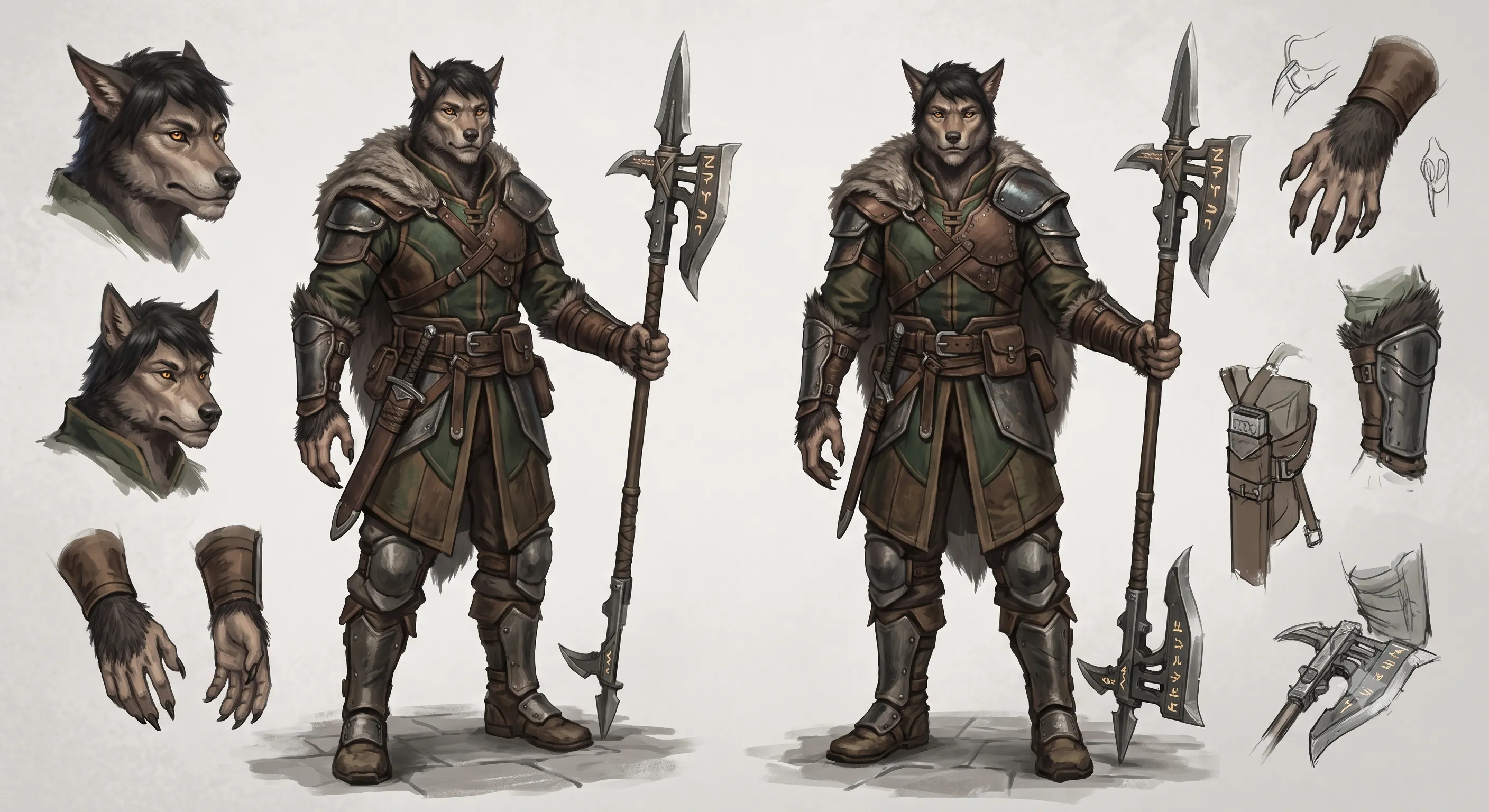
THE KORRVATH (werewolf)
Section titled “THE KORRVATH (werewolf)”Not a monster’s curse but a war-species Grown for calm, exacting violence — a soldier’s body wearing the wolf’s shape on command. Creature Type: Humanoid · Size: Medium · Speed: 30 ft
- The Calm Change — Once per long rest, as a bonus action, assume war-form for up to 1 minute: you grow claws (1d6 slashing, unarmed), gain +10 ft speed, and resistance to bludgeoning, piercing, and slashing damage from nonmagical weapons. The change is silent and controlled — no save, no frenzy, ends early if you choose.
- Pack Sense — Darkvision 60 ft; advantage on Wisdom (Perception) checks that rely on scent or hearing.
- Oath-Iron (the crack) — Manacles or weapons forged of silvered oath-metal suppress your Change (you cannot use The Calm Change while restrained or struck by oath-iron this turn) — an old war-contract failsafe, not a poison.
- Pack Law (the leak) — Acting against the standing order of a ranked packmate imposes disadvantage on the triggering roll; acting under a superior’s sanction alongside a packmate grants you both advantage on the next Help-assisted check.
- Languages: Sulamiri, Korrvathi Howl-cant.
Playability note: A lone Korrvath PC with no clan at the table may designate their adventuring party as an informal “pack” for Pack Law purposes — treat fellow party members as packmates (and whoever is leading a given effort as the ranked/superior packmate) — so Pack Law and its Help-assisted advantage function in solo play.
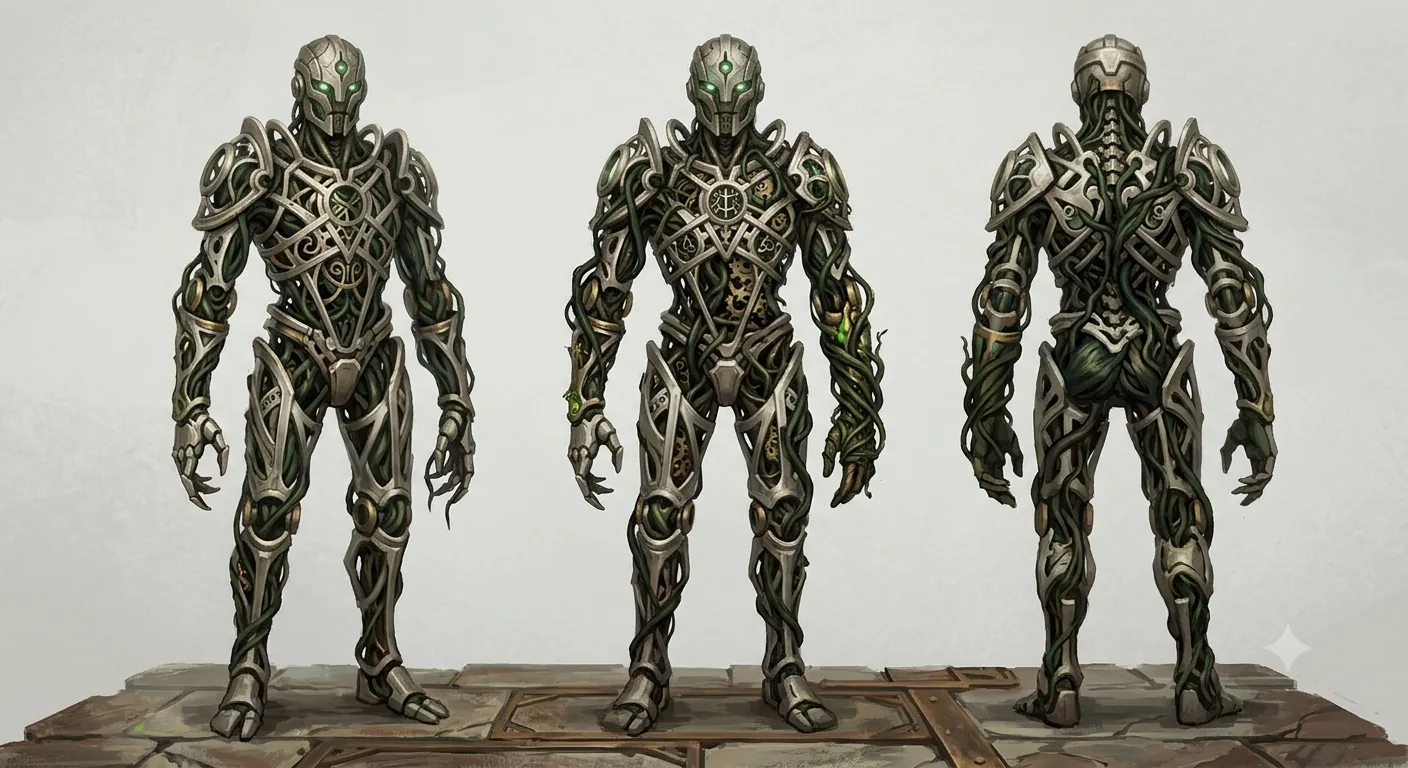
THE KESEVRAI (awakened guardian)
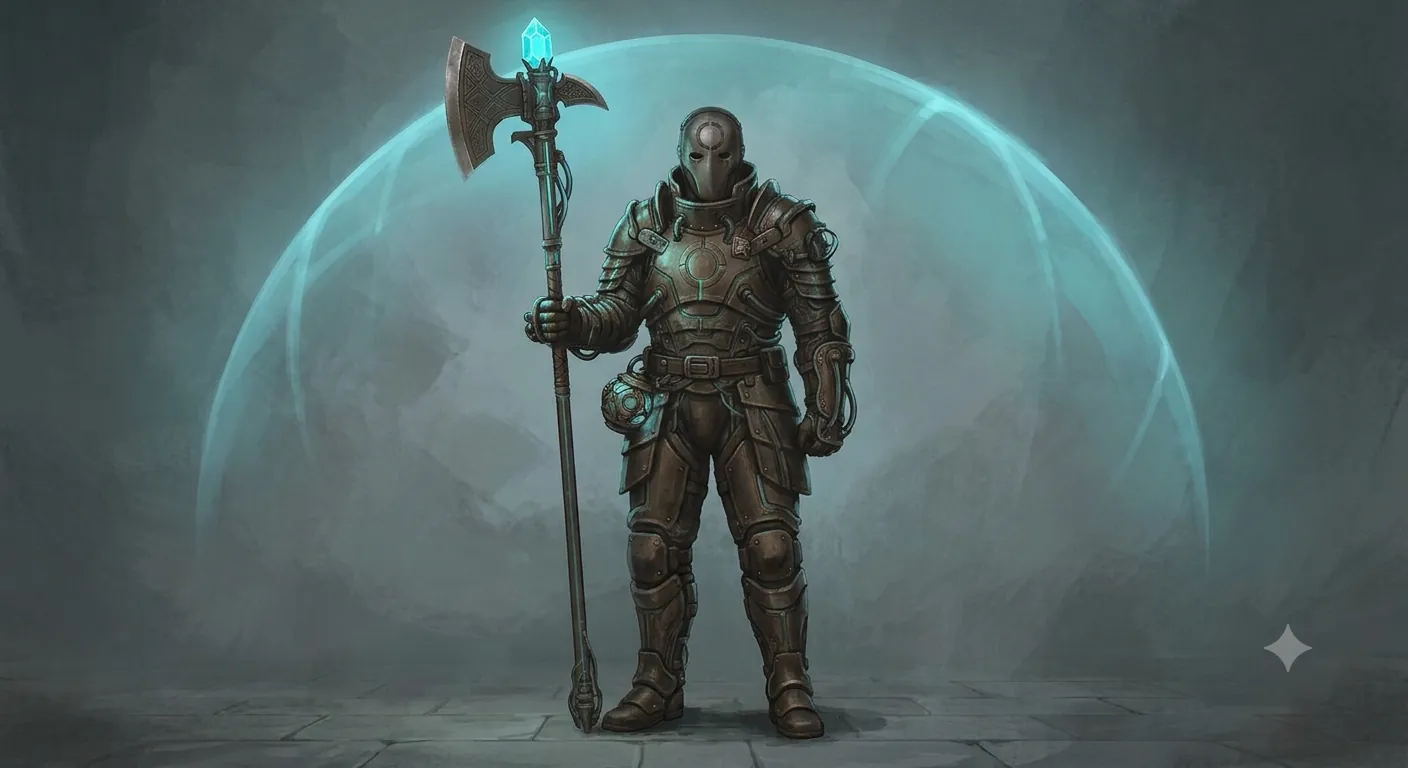
Section titled “THE KESEVRAI (awakened guardian)”A Binding-Growing construct woken to purpose, not born to it — built to endure, and cracked by dreams it was never given room to have. Creature Type: Construct · Size: Medium · Speed: 30 ft
- Wrought Endurance — Resistance to poison damage, immunity to disease, and you don’t need to eat, drink, or breathe. You don’t sleep; instead you enter a 4-hour waking stasis to gain the benefit of a long rest.
- Bound Word — Once per long rest, as a minor Working, you can magically reinforce a spoken rule, promise, or ward for 1 hour: the affected object/door/oath resists being altered or broken by non-magical means (GM adjudicates, Mending-tier).
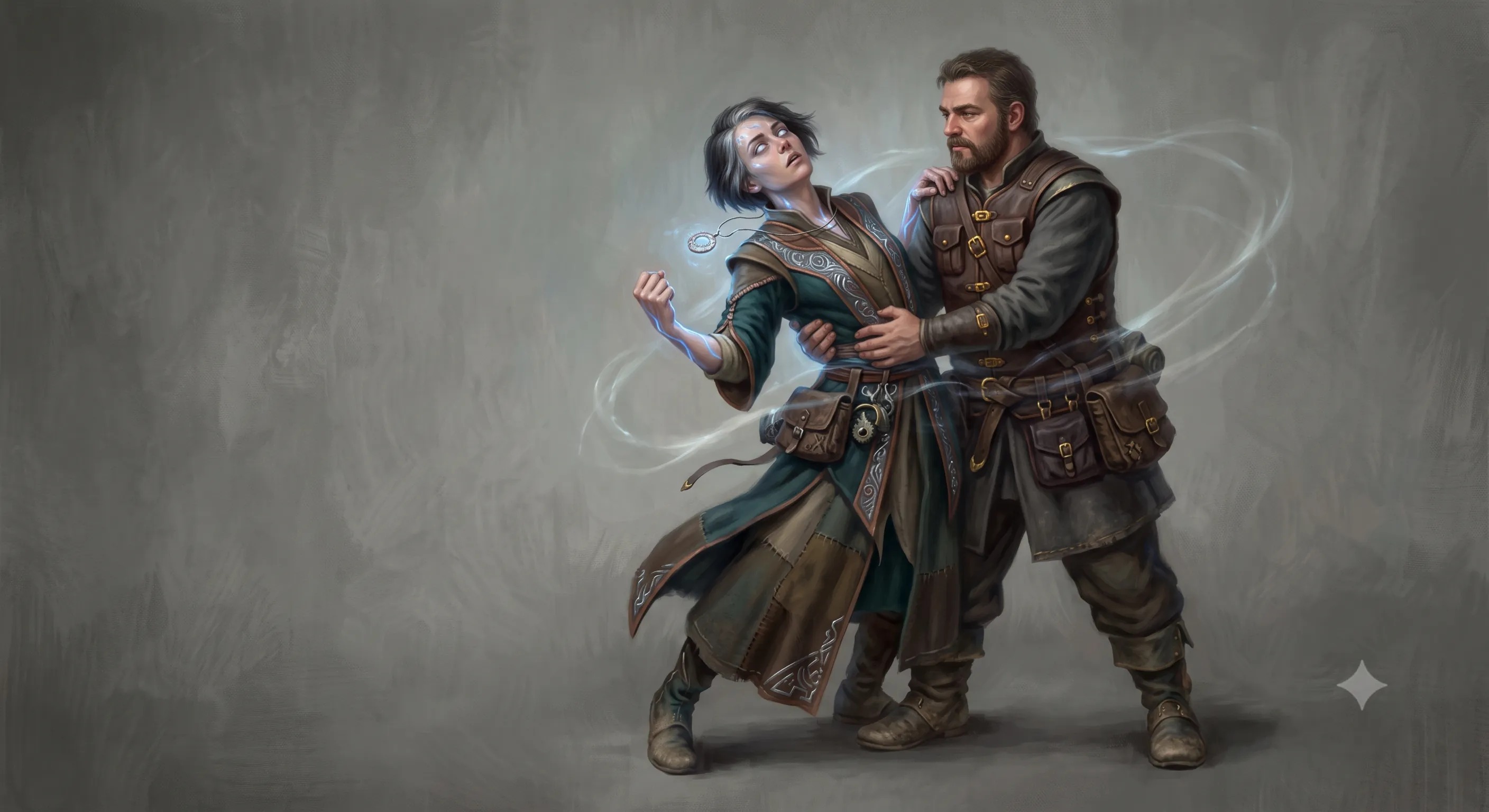
- Dream-Seizure (the crack) — When you take a critical hit or fail a save by 5 or more, you may seize: you are incapacitated until the end of your next turn, but the DM gives you one true, cryptic fragment about your immediate situation.
- Languages: Sulamiri, Binder’s Cant (read-only for most).
Playability note: Most Kesevrai are still infrastructure-bonded and can’t be player characters as built. Your Kesevrai is one of the rare unbonded — woken, then cut loose (deliberately or by ruin) from the structure they were made to guard. In place of a location-bond, they carry a small anchor object (a keystone, a hinge, a nameplate) that grounds Bound Word; losing it doesn’t strip the trait, but the DM may call for a save to avoid a Dream-Seizure when it’s lost.
THE RELETHI (relic-mind)
Section titled “THE RELETHI (relic-mind)”The Kesevrai’s colder sibling-make — a Current-Knowing archive built to remember everything and feel almost nothing, until the nothing gives way all at once. Creature Type: Construct · Size: Medium · Speed: 30 ft
- Perfect Retention — You have advantage on Intelligence checks made to recall information you’ve previously seen, heard, or read, and you never forget it in detail. Once per long rest, you may treat an Intelligence (Investigation, History, Arcana, Nature, or Religion) check as a 20 if you have ever encountered the relevant fact before.
- Near-Affectless — Advantage on saving throws against being frightened or charmed.
- The Starved Heart (the crack) — Emotion arrives late and enormous. Once per long rest, you may deliberately release a Heart-surge as a reaction: choose yourself and up to two allies within 30 ft to gain advantage on their next attack roll, check, or save. Whenever the DM judges you’ve suppressed strong emotion across a scene, mark one Unfelt; at three Unfelt the surge triggers involuntarily at the worst available moment (DM’s call) and you gain one level of exhaustion afterward either way.
- Languages: Sulamiri, Archive-Cant (glyphs only).
Playability note: Like the Kesevrai, most Relethi are archive-bonded to a repository and unfit for adventuring. Your Relethi is an unbonded copy — severed from its archive, carrying its retained records loose instead of anchored. This doesn’t change any trait above, but the DM should treat “what the Relethi remembers” as a standing narrative resource, not just a mechanic.
I’ll compose the final trait blocks directly.
THE VERIMAI (the Chorus)
Section titled “THE VERIMAI (the Chorus)”A people who are barely a “someone” until they’re a “we.” Creature Type: Humanoid · Size: Medium · Speed: 30 ft
- Choir-Sense (the tilt made mechanical) — While within 30 ft of at least one other Verimai (or a bonded ally, see below), you share a low telepathic mood-band: you always know the general emotional state (afraid, resolved, hostile, hiding) of every Verimai/bonded ally in range, and once per rest you may share a single reaction — when an ally you sense would make a saving throw, you may take the same roll they took instead of rolling your own, once, before either result is known.
- Crowd Fluency — Proficiency in Insight, and advantage on checks to read or sway a group of 3+ people rather than an individual.
- The Solo Hush (the leak) — Alone (no Verimai or bonded ally within 30 ft for more than 1 hour), you lose Choir-Sense entirely and have disadvantage on Wisdom (Insight) and Charisma (Persuasion) checks — the world feels muffled and unreadable without the chorus. This clears the moment you rejoin one.
- Role-Covenant — At character creation, swear a civic Role (Warden, Voice, Mender, etc.); once per rest, when acting in that Role, gain advantage on one ability check tied to it.
- Languages: Sulamiri, Verimai chorus-cant (a hand/hum register used only among the Chorus).
Playability note: A traveling Verimai is an “outrider” — sent out by their cell specifically because someone must be sent. Let the player nominate one absent NPC or a second PC as their bonded-cohort-at-a-distance: Choir-Sense’s range becomes unlimited for that single bonded target only (mood-sense, not the shared-reroll), representing the thread that never fully cuts.
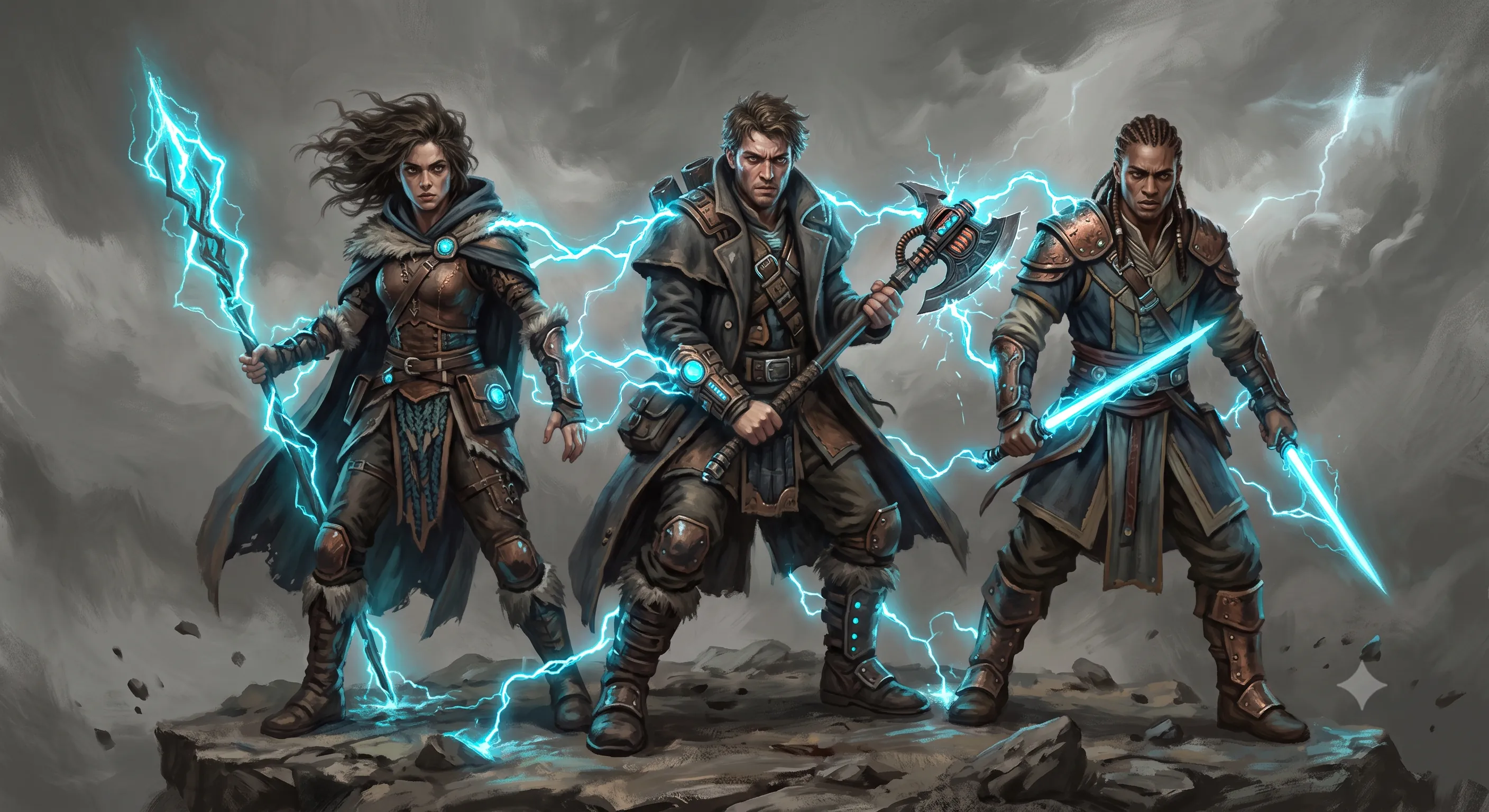
THE ZENNORAI (the storm-cell)
Section titled “THE ZENNORAI (the storm-cell)”Two bodies, one lightning — apart, they misfire. Creature Type: Humanoid · Size: Medium · Speed: 30 ft
- Cell-Synchrony — When you and a Current-bonded cellmate (established at creation, typically another Zennorai PC/NPC) are both within 10 ft and both take the Attack or Cast a Spell action targeting the same creature on your turns, the second of you to act deals an extra 1d6 lightning damage on a hit or spell that deals damage. Usable once per round, cell-wide.
- Storm-Skin — Resistance to lightning damage; you don’t need metal to conduct — you crackle faintly when angry (no mechanical tell required, purely cosmetic unless you want it to matter).
- Out-of-Cell Jitter (the leak) — If you’ve gone more than 24 hours without your cellmate within 30 ft, you suffer a static charge: disadvantage on Concentration saves, and the first spell or Current-based ability you cast each day deals half damage/effect (uncontrolled discharge). This is a rare people — most who encounter one are actively searching for their lost cell.
- Cell-Rite — Once per long rest, cellmates who touch and speak the fixed cell-rite together clear one exhaustion level or one point of Strain/Fray from each other; it only works cell-to-cell, never solo.
- Languages: Sulamiri, Zennorai storm-cant (percussive, mostly untranslatable outside a cell).
Playability note: The default Zennorai PC is a scattered cell-member — their partner is dead, lost, or elsewhere. Let them designate any willing PC as a temporary rite-partner (slow, requires downtime to attune) to regain Cell-Synchrony and the Cell-Rite; until then, they run permanently jittery, which is the character’s hook, not a debuff to fix immediately.
THE ZHEVANN (the oracle-folk)
Section titled “THE ZHEVANN (the oracle-folk)”They married both halves of the Current and now the future leaks out of them sideways. Creature Type: Humanoid · Size: Medium · Speed: 30 ft
- Unbidden Omen (the tilt made mechanical) — Once per long rest, as a reaction to a moment of high stress (being reduced to 0 HP, a critical hit against you, or the GM’s discretion at a dramatic beat), you seize and receive a true glimpse of a coming event — GM’s choice of what you see, not yours; mechanically, you and each ally within 30 ft gain advantage on the next saving throw they make within 1 minute.
- Current-Married — Resistance to lightning and thunder damage; you can sense the direction of the nearest significant Current-working (spell, storm-cell, ley-scar) within 1 mile, though not its nature.
- The Catcher-Bond (the leak) — During a seizure you are incoherent — blinded and unable to act or speak plainly for 1 minute unless a bonded Catcher (a specific named ally, PC or NPC, chosen at creation) is within 5 ft to translate; without a Catcher present, the omen still happens but you gain no benefit from it and are instead prone and stunned for the duration.
- Languages: Sulamiri, Zhevann omen-tongue (only a Catcher can parse it in the moment).
Playability note: The Catcher can be a second PC (a party member formally takes the role, gaining nothing mechanical themselves but becoming essential) or a recurring NPC who travels with the party — either way, name the Catcher at session zero.
THE ASHENDREL (the grove-grafted / dryad)
Section titled “THE ASHENDREL (the grove-grafted / dryad)”Grown, not born — and the grove never stops calling them home. Creature Type: Humanoid (Plant) · Size: Medium · Speed: 30 ft
- Grove-Made (the tilt made mechanical) — Once per long rest, you may spend 1 minute rooted and undisturbed to regain hit points equal to your level, or instead cure one disease or neutralize one poison affecting you.
- Bark-Skin & Green Sense — Resistance to poison damage; you have advantage on Wisdom (Survival/Nature) checks to identify plants, track through overgrowth, or sense the health of a natural area.
- Root-Fixity (the leak) — You are bonded to your home grove. If you spend more than 30 days total away from it (tracked cumulatively), you gain one level of exhaustion that can’t be removed by rest until you return and touch the grove — your Grove-Made healing also stops working once you’re sickened this way.
- Seedling-Cutting — At creation, you carry a portable graft: a single cutting or seedling of your grove, tended daily (1 minute). While it lives, it counts as “your grove” for Root-Fixity’s clock (resetting it) and for Grove-Made’s rooting — but if the cutting dies (exposure, neglect, fire, hostile action), the countdown to sickness resumes immediately and you feel the loss like a wound.
- Languages: Sulamiri, Ashendrel root-speech (spoken with growing things, not people).
Playability note: The seedling-cutting is the adventure hook — protecting, watering, and eventually replanting it is a standing character concern the GM can lean on.
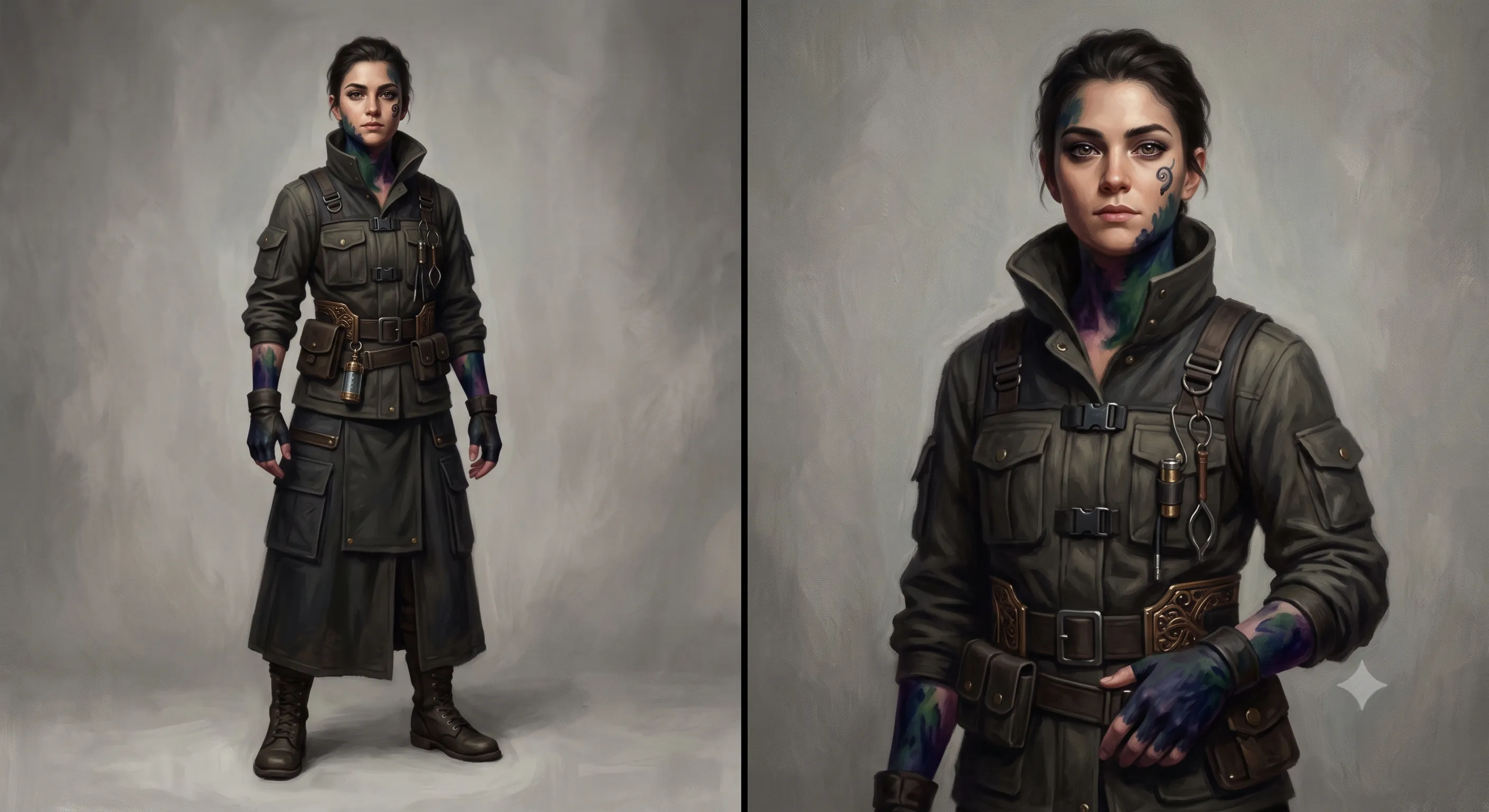
THE YULNESH (the “walking dead,” border-folk)
Section titled “THE YULNESH (the “walking dead,” border-folk)”They chose to forget rather than be taken — and they’d choose it again. Creature Type: Humanoid · Size: Medium · Speed: 30 ft
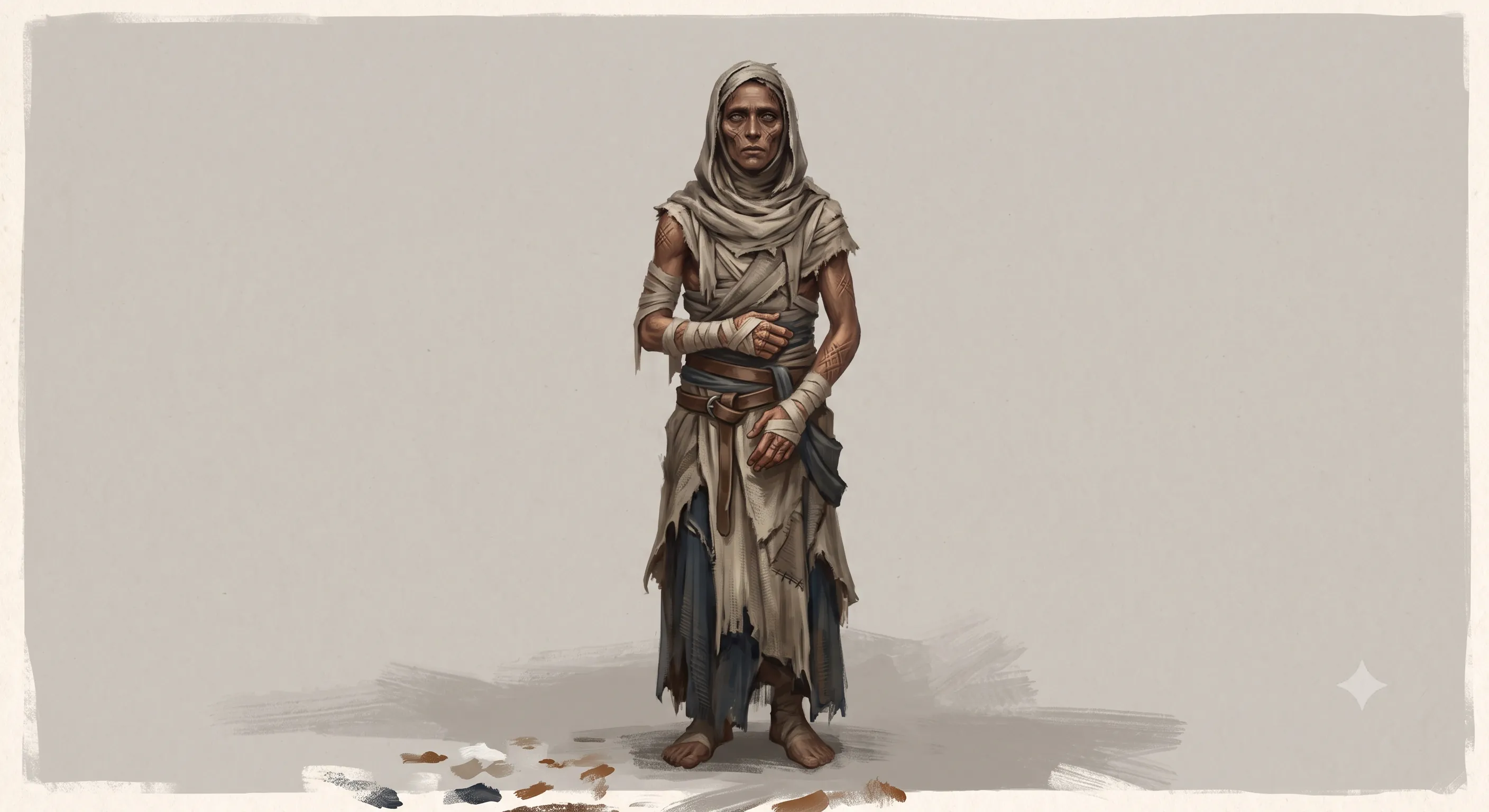
- Shed Self (the tilt made mechanical) — Once per long rest, as a bonus action, you may deliberately erase a recent memory (GM and player agree on scope — an hour, a name, a fear) to gain advantage on all saving throws against being frightened, charmed, or against psychic damage until the end of your next turn. This is a rite you chose, not something done to you.
- Wound-Walker — You have darkvision 60 ft and resistance to psychic damage; you have advantage on saving throws against effects that would cause madness, memory loss you didn’t choose, or Hollow-blight, having already hardened yourself against the border.
- The Gaps (the leak) — You have real, permanent holes where memory should be — a name you don’t know is your own, a face you can’t place, a skill you clearly once had and no longer do. Once per session, the GM may invoke a Gap to complicate a scene (you don’t recognize someone who clearly knows you, you can’t recall a critical fact); when they do, you gain inspiration (or your table’s equivalent).
- Languages: Sulamiri, fragments of a home-tongue you can no longer fully place.
Playability note: Yulnesh are living people who chose the erasure rite to survive the Wound’s border — never confuse them with a Hollow-thing at the table or in fiction. Play them as amnesiacs with a past worth uncovering, not as undead; the Gaps are the character’s central mystery, not a debuff.
Concept gallery — the Peoples
Section titled “Concept gallery — the Peoples”